

2016
Jio 4G
An all-internet 4G network. Free calls, pay only for data.
What it achieved
First in India to 100 mn 4G customers, in under 180 days
RHP p.209, 249Launched in 2016, Jio now serves 533.3 million customers in India. It sells them the connection, then TV, cloud, apps and AI on top of it.
215.6
is what the average customer paid Jio a month, April to June 2026.
ARPU (average revenue per user), quarter to 30 June 2026 · RHP p.131
For every ₹100 tied up in the network and the rest of the business, this is what the business itself earned in a year, before interest and deferred tax. Money spent on networks and spectrum not yet switched on is left out.
It slipped over the three years: the money tied up grew faster than what it earned.
ROACE, restated · RHP p.132
Almost all of Jio's money still comes from connectivity: people paying for mobile and home internet. Everything else, from apps to AI, is built to make that connection worth more each month and harder to leave.
Each customer uses a lot more data than two years ago. Heavier use is what makes the TV, cloud and app bundles on top worth selling.
Chapter 03How Jio changed mobile data in IndiaSpending on the 5G build has passed its peak, so far more of each year's earnings is now left over as cash.
Chapter 08How Jio makes moneyWhat Jio owes, less the cash it holds, has fallen sharply when set against a year's earnings.
Chapter 08How Jio makes moneyJio Platforms Limited (JPL) is the digital and telecom company of Reliance Industries. Jio built a 4G network that carried only internet traffic, made voice calls free and made data cheap, and that is how it became India's largest digital connectivity player. The prospectus calls it a technology platform rather than a phone company. The simplest way to read it is as six parts, each with its own colour, used the same way in every drawing below.
Each part of the business has its own colour, used the same way in every drawing below. Each cell says what the part is, what to watch, and which chapter covers it.
Each cell is one part of Jio's business. The coloured tile is that part's colour for the rest of the report: blue is always the mobile network, mint always home broadband, and so on. The numbers live in the chapters; the link at the foot of each cell takes you to the one that covers that part.
4G and 5G phone plans on Jio's own network.
What to watchWhether people move to 5G and pay more each month as they use more data.
Chapter03JioFiber by cable and JioAirFiber over the air.

What to watchHow fast AirFiber reaches the homes that cable does not.
Chapter04MyJio, JioTV+, JioSaavn, JioAICloud and JioGames.




What to watchThe apps come inside the plan, so watch whether they make the plan worth more.
Chapter05Connectivity, cloud, IoT, messaging and security for companies.
What to watchWhether cloud, IoT and security grow beyond selling a connection.
Chapter06Staff, Jio Centres and Reliance Retail shops that sell and install.
What to watchHow much selling, installing and service moves to the app and AI.
Chapter07Its own 5G software, devices and the JioBrain AI.
What to watchWhether Jio can sell its own 5G and AI tools to other telecom companies abroad.
Chapter09Three things to know
Jio Platforms Limited is the holding company. Its main subsidiary, Reliance Jio Infocomm (RJIL), holds the telecom licence and the spectrum and runs the network.
The six colours are a way to read Jio, not how it reports. The accounts show one business. Connectivity brings in substantially all of the revenue, and the apps and other products are bundled into it, so no part has a revenue figure of its own.
When the prospectus says FY26 it means 1 April 2025 to 31 March 2026. The newest figures in this report are for April to June 2026, the first three months of the next year.
Looking at Jio as an investment? Our separate Jio Platforms IPO report covers the price, valuation, owners and risks.
The prospectus draws Jio as five layers, one on top of the other. Start at the top, with what you touch: the apps and services. Under them is the network that carries them, then the app, TV box and shops where you sign up and get help, then what Jio learns from how people use it. At the bottom is the technology Jio built itself. Each layer holds up the one above.
Top: what customers use. Bottom: what Jio built. For each layer, what it does for you, one key fact, and who owns it.
Start at the top: that is what you use. Each row holds up the row above it. On the left, what the layer does for you and what is in it. On the right, one key number and who owns that layer; a hollow dot means Jio shares or leans on someone else there. Colours match the rest of the report: purple apps, blue network, orange shops and partners, cyan data and technology. Customer insights is drawn in ink because it comes from every part at once.
Layer 05
For youWhat you open and use: TV, music, games, cloud storage, a PC in the cloud and AI tools. For a company: Wi-Fi, cloud, connected devices and security.
Bundled
the apps come inside connectivity plans, so their own revenue is not shown separatelyp.200
Who owns it · shared
Jio owns and built its apps. Content, cloud and AI partners (Netflix, JioHotstar, Google, Microsoft) are non-exclusive and come up for renewal.p.198–199, 227
Layer 04
For youThe signal on your phone and the internet at home or at work. Everything above travels on it.
99%+
of India's people can get Jio wireless broadbandp.198
Who owns it · Jio
Jio's own network. Cloud partners: Microsoft and Google Cloud.p.198
Layer 03
For youWhere you sign up, recharge, pay and get help: in the app, on the TV box, or at a shop near you.
Phygital = physical plus digital: the doors you come in through, online and in a shop.
Two tiers
a Jio Centre runs field staff, training and spare parts for its zone; the Jio Points near it report to itp.228
Who owns it · shared
The app and the TV box are Jio's. The shops sit on Reliance Retail premises.p.198
Layer 02
For youOffers and services that fit how you use Jio, and apps that learn what you like.
A loop
more use makes more data, and Jio uses that data to improve its apps and the experiencep.198
Who owns it · Jio
Comes from the customers of RJIL (Reliance Jio Infocomm, Jio's main operating company).p.198
Layer 01
For youWhy the network can stay cheap and new features arrive fast: Jio pays fewer outside vendors.
Top 20
the only Indian company among the world's top 20 patent filers (WIPO PCT ranking, 2025)p.197
Who owns it · shared
Patents are Jio's. The “Jio” name is owned by Reliance Industries and licensed to Jio; the licence can end if Reliance loses control of Jio.p.198–199
Jio's own product and technology team, and its patent applications, 30 June 2026
Four things Jio built itself
The only connectivity provider in the world with its own end-to-end 5G standalone stack, says the Analysys Mason report Jio commissioned. It made India the fifth country with home-grown 5G.p.197, 201
Jio's own AI predicts faults and shares out capacity in real time. The goal is Level 4 of the industry's six-level scale (0 to 5) for networks that run themselves.p.197, 199
A phone operating system that runs on cheap chips with little memory, so low-cost phones can still use digital services.p.197
Jio's own unlicensed-band radio (UBR) carries home internet through the air to a small box on the home, so no cable has to be laid.p.201–202
In 2016 most Indians were on 2G. Data was expensive, slow and sold separately from calls and SMS. Jio launched a network built only for the internet (calls travel as data, a technology called VoLTE), made calls free and charged only for data. This chapter shows what changed for India, what Jio launched next, and where its mobile business stands today.
Three measures of mobile data, before Jio launched in 2016 and in 2026. Figures for the whole industry.
Each row compares one measure before Jio launched with today. The grey bar is before, the blue bar is now, both on the same scale within the row. For price, a shorter bar is better. These are figures for the whole industry, which the RHP shows to describe the change Jio led.
Mobile data per user in the March quarter of each year.
Average cost to the customer per GB. India's price now compares with ₹33.4 in China and ₹228.4 in the USA. p.160
Blended speed across the industry, January 2016 and March 2026.
Each new product rode on the customers the last one brought in
Turn the pages: each spread is one launch, in the year it began. The left page shows the product; the right page says what it is and what it achieved, with the RHP page. The colour marks the part of the business. The last page is still being built, not a business yet.
2016
An all-internet 4G network. Free calls, pay only for data.
First in India to 100 mn 4G customers, in under 180 days
RHP p.209, 2492017
A 4G feature phone with low-cost data plans.
By September 2017, Jio had 42.67% of India's broadband users
RHP p.249–250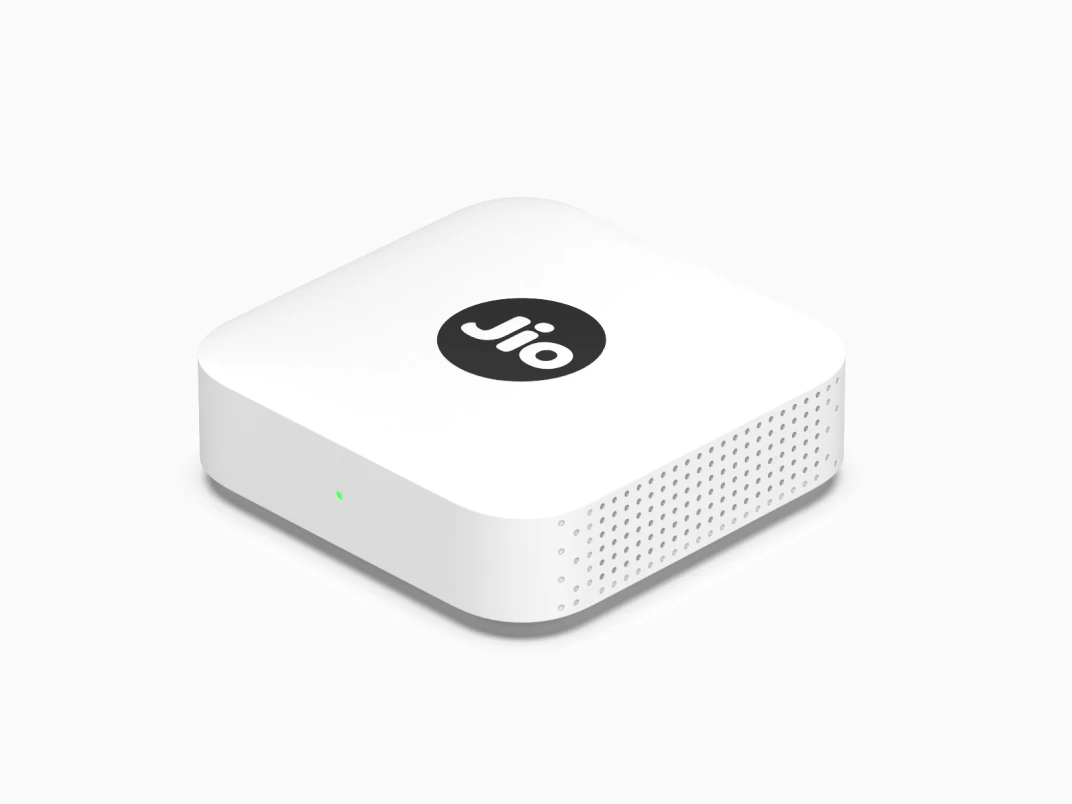
2019
Fibre broadband to the home, up to 1 Gbps.
Start of the home business
RHP p.218, 2502021
An affordable smartphone on Pragati OS, a lighter version of Android.
Developed jointly with Google
RHP p.2502022
India's first standalone 5G network (it runs without leaning on 4G). Being standalone, it can carve one network into private lanes with their own speed and security, for a factory or cloud gaming (network slicing).
The fastest 5G rollout in the world
RHP p.184, 201, 206–207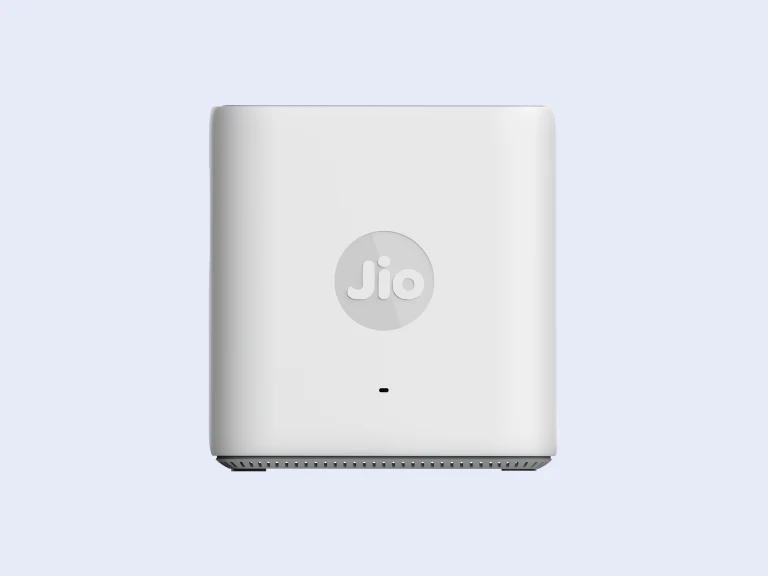
2023
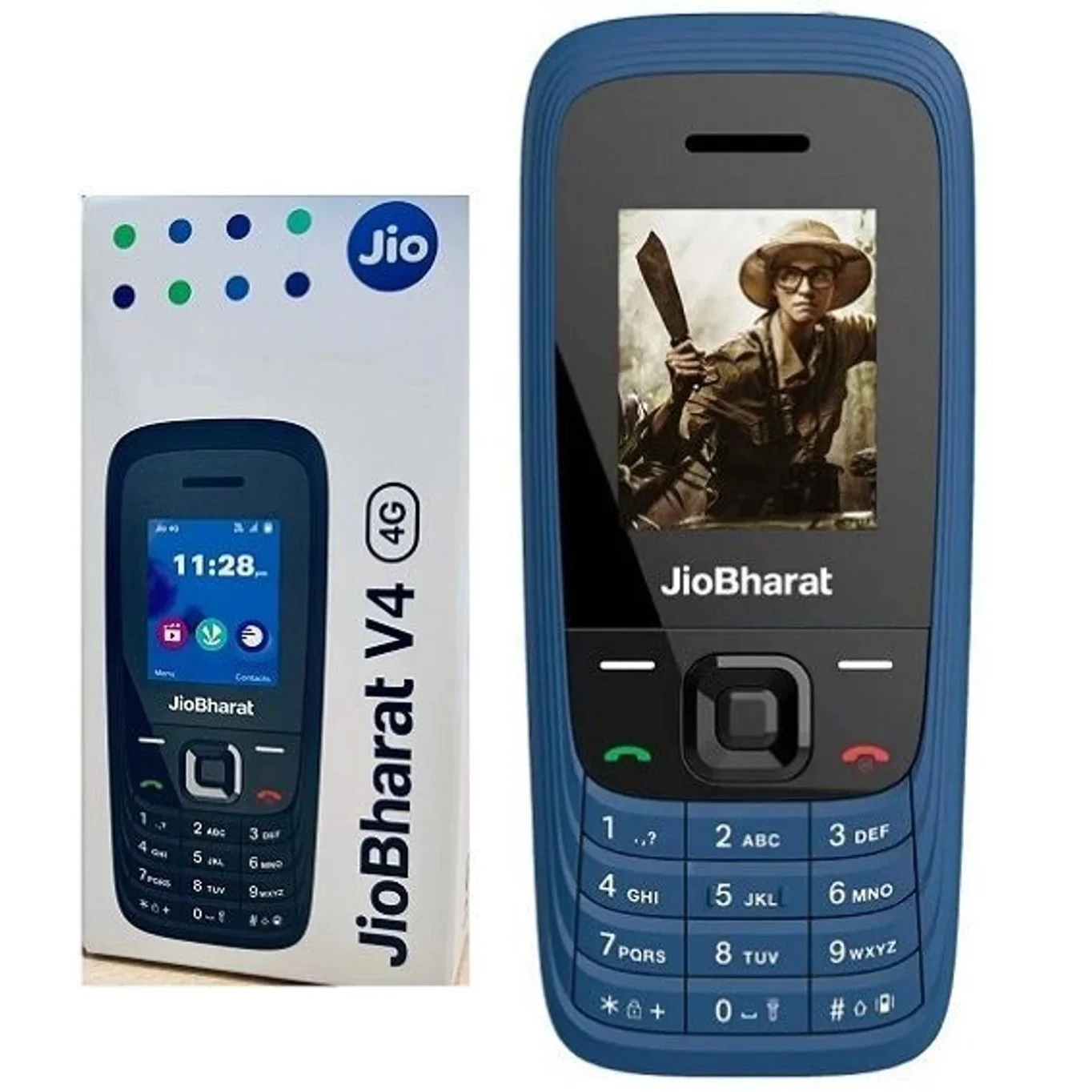
Home broadband by radio, with no cable to lay. JioBharat, a ₹799 4G phone that runs UPI payments, video and music, for people still on 2G.
Built to move feature-phone users off 2G
RHP p.213–215, 250
2024
Cloud storage for photos, videos and documents.
AI face grouping and photo editing built in
RHP p.218, 250
2025
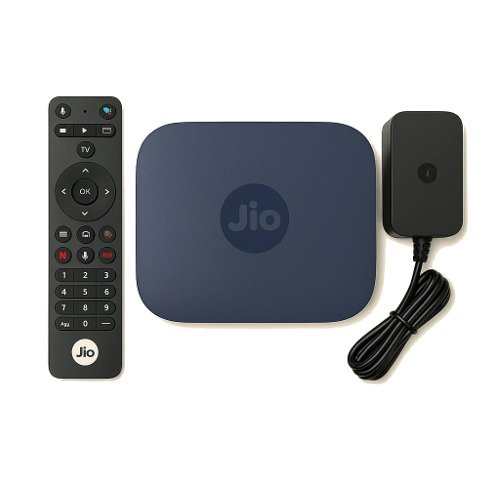
A full computer on any TV, run from the cloud, pay as you go.
Delivered through the set-top box
RHP p.219, 250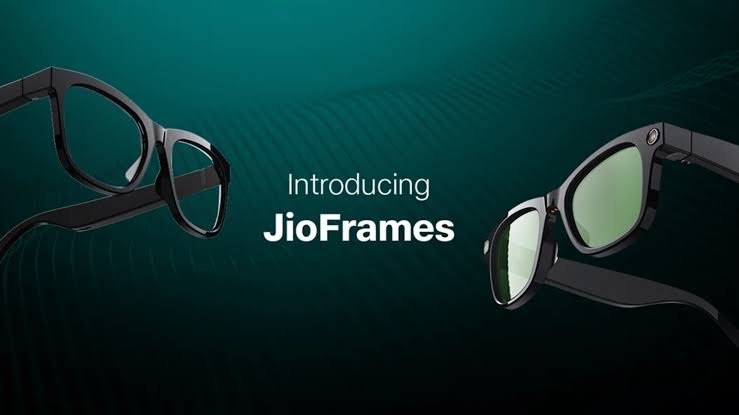
Next
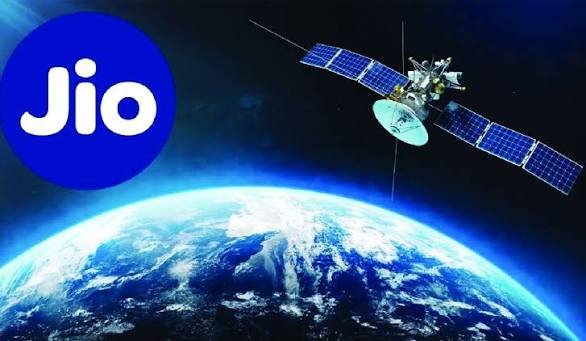
AI smart glasses in development. Satellite links for remote areas are being evaluated.
Not yet a business
RHP p.215, 2192016, Jio 4G
Jio's customers and what they pay and use, at each year-end and in the June 2026 quarter
Pick a measure with the switch. Each is the RHP's own figure for the last three years and the June 2026 quarter. Customers are counted at the end of each period; ARPU, data use and churn are for the last quarter of each year (the exit quarter). In the customers chart, the blue part is customers on mobile broadband and the grey cap is everyone else (derived: total minus mobile broadband).
Customers · Million, at the end of each period
| FY24 | 481.8; On mobile broadband 469.7; Other customers (derived) 12.1 |
|---|---|
| FY25 | 488.2; On mobile broadband 469.8; Other customers (derived) 18.4 |
| FY26 | 524.4; On mobile broadband 496.3; Other customers (derived) 28.1 |
| Q1 FY27 | 533.3; On mobile broadband 503.6; Other customers (derived) 29.7 |
Almost all of Jio's customers are on mobile broadband. The small remainder has been growing; the RHP does not say who they are. A tariff rise in July to September 2024 lifted ARPU but also raised churn, so FY25 added only 6.4 million customers (derived: FY25 minus FY24).
Jio in mobile today
5G
Far fewer Indian homes have fixed broadband than homes in China, South Korea, the UK, the USA, Japan, Canada or Brazil. One reason is cost: laying fibre is slow, because someone has to dig the street, get permissions and pull a cable up every building. Jio sells two ways round that, one by cable and one by radio. The home line then carries a second product: Jio's TV box.
Jio fixed broadband customers, million, end of each period · growth is our arithmetic (derived)
Each column is the number of homes (and a few small offices) paying Jio for fixed broadband at that date. The columns are in time order, so the gaps are not equal: two full years, then three months, nine months and three months. The ruler under the axis shows each gap. Each value is printed on its column, and the RHP's own growth rates show above the chart; the times-over growth in the title is our arithmetic on the RHP's numbers.
Q1 FY2027LatestJun 2026Up 43.00% on June 2025
The years between columns are not equal; the strip under the axis shows each step.Changes (% or ×) are our calculation from the RHP figures.
Q1 FY2027: Jio home customers 28.6 mn
| Column | Jio home customers |
|---|---|
| FY2024 · Mar 2024 | 11.2 mn |
| FY2025 · Mar 2025 | 17.4 mn |
| Q1 FY2026 · Jun 2025 | 20.0 mn |
| FY2026 · Mar 2026 | 27.1 mn |
| Q1 FY2027 · Jun 2026 | 28.6 mn |
Two ways into the home, then fixed broadband customers by company and technology, million
One bar per company, in million fixed broadband customers. The solid part is a cable to the home (fibre, or older copper lines for some rivals); the lighter part is fixed wireless over 5G or radio. Switch between March and June 2026 to see the quarter's change. All of Jio's wired customers are on fibre.
JioFiber
A glass-fibre cable runs all the way into the home.
JioAirFiber
Radio from Jio's 5G network, or from its own UBR radio (radio on airwaves that need no licence), reaches a small box on the home. No cable to lay.
Fixed broadband customers by company and technology, 30 June 2026 (Q1 FY2027): Jio 28.6 mn (43.32% of customers): cable 14.6 mn, fixed wireless 14.0 mn; Bharti Airtel 14.9 mn (22.61% of customers): cable 11.1 mn, fixed wireless 3.8 mn; BSNL 4.5 mn (6.84% of customers): cable 4.5 mn, fixed wireless 0.0 mn; Other ISPs 17.5 mn (26.49% of customers): cable 17.5 mn, fixed wireless 0.0 mn.
Shares are of all fixed broadband customers in India, 30 June 2026 (Q1 FY2027). Another 0.5 mn customers are on other fixed wireless with no company split. Jio has about 1.9 times the customers of the next company and 78.62% of all 5G and radio home wireless.
Who is winning the new homes
The RHP calls the Jio set-top box a “digital gateway” into the home: how much it is used, and what runs on it, 30 June 2026
5.0hours a day
Average daily use of a Jio set-top box, April to June 2026p.202
On the box
Jio Tele OS. Jio's own operating system for smart TVs. It puts the same services inside the TV itself, with no separate box.p.212
Jio's apps are rarely sold on their own. Most come inside a mobile or home plan, and the price of each is shown separately in the planp.217. Jio reports one business segment, so the prospectus gives no revenue for any single appp.200. What it does give is reach. The apps have one job: make a plan worth more, so customers pick bigger plans and leave less oftenp.211, 439.
Million, June 2026 quarter unless marked. The full bar is Jio's whole customer base, for scale.
Each bar is one service. Its length is the number of people it reaches, measured against all of Jio's customers (the full grey track; Chapter 3 gives the count). Purple bars are Jio's own apps; orange bars are services that come inside a Jio plan. The bars count different things (monthly users, offers, season viewers, sign-ups), so do not add them up.
All Jio apps together362.6 mnmonthly active usersp.202
video and music subscriptions given with plans, a monthp.209
 IPL 2026 on the JioHotstar pack198.7 mn
viewers over the seasonp.203
JioAICloud66.0 mnregistered usersp.218
Consumer services, grouped as in the RHP, with how each is paid for
Read one row at a time. On the left is the group and how customers pay for it, as the RHP describes it. On the right are the services in that group, what each does, and its main number where the RHP gives one. Services marked Partner belong to other companies; Jio sells them inside its plans.
MyJio app
Recharge, change plans and fix problems without calling anyone. Also a shop window for others: JioFinance, the app of the separately listed Jio Financial Services, sits inside it.
p.203, 211–212
 JioTV+
Live TV and streaming apps in one place. Built into the Jio box, and an app on other TV systems.
p.218
JioSaavn
Music streaming, run by Saavn Media, a Jio subsidiary. The RHP's industry report names it a leading audio app in India, alongside YouTube Music and Spotify.
100 mn+ songs · 16 languages · 15 genresp.173, 218, 267
JioGames
Casual games, game streaming and e-sports. Played on the TV through the Jio box and the cloud, with no console.
3,700+ titlesp.212, 218
JioHotstarPartner
A partner, not part of Jio Platforms: it is run by Jiostar India, a Reliance Group company. Jio puts its subscription inside plans.
p.36, 211, 227
JioAICloud
Launched 2024. Stores photos, videos and documents, with AI that groups faces and edits photos.
p.218
JioPC
Launched 2025. A full desktop computer on any TV through the Jio box, run from the cloud. Pick the storage and memory you need and pay as you go.
p.219
Jio box and JioHome
The set-top box has its own app store, JioStore, with Jio's and other companies' apps, and controls connected home devices from one screen.
p.200, 212, 218
Google AI ProPartner
Free for 18 months on Jio's Unlimited 5G plans, offered with Reliance Intelligence.
p.203
Assistants and enterprise AI
AI assistants built with Jio Haptik. Jio also plans to sell business AI from the joint venture of Reliance Intelligence and a Meta subsidiary.
p.200, 203
JioFrames
Hands-free AI smart glasses to view and record content and make sense of things in real time. Still in development.
p.219
The companies the RHP names as partners for bundles and cloud, and how a bundle earns
JioHotstarFor people
Streaming, put inside plans during IPL 2026
NetflixFor people
Streaming, put inside plans
GoogleFor people
Google AI Pro for people; Google Cloud for firms
MicrosoftFor firms
Azure cloud, edge and AI resold to firms
How a bundle pays Jio p.211
A wanted app in the plan brings people to Jio.
Plans with streaming and sport push people to recharge higher, and the extras keep them from leavingp.439.
Jio earns part of the partner's subscription and advertising revenue.
How Jio keeps a popular stream close to the viewer: its own content delivery network
The content Jio's network must carry to millions at once.
100+ nodes
Copies are kept (cached) in local exchanges and data centres inside the 4G and 5G network.
Viewers are served from a nearby copy, so there is less delay (latency).
Companies buy from Jio the same building blocks that homes do, in a different package. The connection comes first. Cloud, software and security sit on top. More and more, Jio sells a managed service: it runs the whole set-up for a business and answers for the result.p.216–217, p.219–221
Share of each industry the prospectus counts as a Jio customer, 30 June 2026
Each bar is one industry. Its length is the share the prospectus gives for it: banks, states and union territories, airports, connected two-wheelers, or the top 10 IT companies. Logos under a bar are customers the prospectus names in that industry.
Four layers, sold one at a time or run together by Jio as a managed service
Layer 1
The line into the office, the shop and the plant.
Mobile 4G and 5G, office broadband and AirFiber, leased lines (ILL), MPLS, VPN and SD-WAN.p.200, 216, 219
None named
Jio supplies the devices, the cloud controller and the security, and the business pays as it uses it.p.219, 221
A business's own slice of the 5G network, more secure than the public one. On trial in factories, warehouses and mines.p.221
Trials only so far
Layer 2
Renting computing power and storage instead of buying servers.
One platform to run work across Jio's own cloud and others. Jio offers Microsoft Azure as a partner, works with Google Cloud, and links firms to several clouds at once.p.200, 217, 220
Layer 3
Software a business uses to talk to customers, track machines and sell ads.
SMS, WhatsApp, email, rich messages and voice to customers from one place, with the analytics.p.220
Rich messages (cards, carousels, video) on Android and iPhone. On most phones sold in India in the last three years they land in the phone's own SMS inbox.p.220
Connected machines: smart meters, payment terminals, two- and four-wheelers, and charging stations, with tracking and maintenance alerts.p.200, 220
Targeted display, video and audio ads for brands and agencies, managed or self-serve.p.221
Jio's own AI, sold for forecasting, automation and network tuning.p.200
None named
Layer 4
Keeping the network and the data safe.
A quantum-safe network with unified threat management and zero-trust access, plus SD-WAN to run all of a firm's links from one place.p.200, 217, 221
None named
All four layers
Jio takes all four layers and runs them end to end for one agreed result, including a managed network operations centre. The prospectus says this can build deeper ties and more value per customer than selling one product at a time.p.200, 216, 220
Words used here
The examples the prospectus gives of Jio building for one kind of business
Connection and in-room entertainment in one package, plus live occupancy data, guest requests and feedback, and digital sales of services.p.221
Fleet tracking by location and route, driver-assistance safety features, driver analytics and maintenance warnings before a breakdown.p.221
A content delivery network for live events; Chapter 5 shows how it works.p.221
Next on the list is small business: Jio wants AirFiber to be the office line for India's small firms, with cloud, messaging and security sold on top.p.216–217
Chapter 09The size of that marketA network is useless if people cannot buy it, install it and get it fixed. This chapter follows the machine in order: how Jio reaches a customer, how a home gets connected, what Jio owns and what it rents, and the airwaves underneath it all.
Two digital, one physical, all feeding the same Jio account
Each column is one way a customer meets Jio. The two digital doors (app and TV box) cost little per customer; the physical door needs shops and people. The strip below is the chain of command behind the shops, from the state office down to the person at your door.
Discover, buy, recharge and fix problems without calling anyone.
Once it is installed at home, every new service is one click away on the big screen.
Shops and local staff who sell, check ID, install and repair.
Behind the third door: the chain of command
State office
Runs a region
Jio Centre
Back office: hiring, training, stock and install kits
Jio Point
A small local shop in towns and villages
Associate
A freelance seller or installer, based at a Centre or Point, who comes to your door
27,932 full-time employees by function, 30 June 2026
Point at or tab to a bar to compare it with Digital products & technology. Ratios and gaps are our arithmetic.
How the tools in the prospectus fit together on a single install
Most start in the MyJio app or with a local associate.
MyJio produced about 20 million home leads in FY26.p.212
Jio keeps a 3D copy of its towers, fibre and buildings. Before anyone visits, it marks each building, floor by floor, as feasible, planned or not feasible.
Used to plan roll-outs and get installs right the first time.p.210
Standard 'kitbags' let trained local staff install the same way everywhere. AirFiber needs no cable dug into the ground.
The kits are kept at each Jio Centre, which also trains, certifies and signs up the installers.p.228
JioGridX records 82 readings at each location, such as speed, coverage and traffic, and raises work orders. JioBrain, Jio's own AI, spots faults early. Towers tilt their antennas automatically to balance load.
Aim: level 4 on the TM Forum scale of self-running networks, which runs from 0 (manual) to 5 (fully self-running).p.199, 211, 214
Self-service in MyJio, the HelloJio voice assistant in 12 languages and phone menus in 14 languages, with human agents behind them.
84% of service requests in the June 2026 quarter went through self-service or AI; most routine issues are fixed in under 3 hours.p.211, 228
What Jio owns, what it rents on 30-year contracts, and who it partners with
The scarce, hard-to-copy parts.
All the active network gear
Radios, base stations, switches, servers, routers and the systems that run operations and billing, bought from suppliers on non-exclusive contracts. Jio also owns the last stretch of fibre to the customer.
Spectrum in all 22 circles
The right to use the airwaves, won at government auctions and usually valid for 20 years. Jio holds more than any other Indian operator; the next exhibit shows it band by band.
Its own network software
5G core, operations and billing systems, JioBharat OS, Jio Tele OS and the set-top box design.
Long contracts with a few suppliers.
Access to 360,537 towers
Nearly half belong to Summit Digitel, once part of Jio as Reliance Jio Infratel, under a 30-year deal of December 2019 (first note below). Most of the towers are linked by fibre.
1.0 million+ route km of fibre
About 98% of Jio's fibre needs come from Jio Digital Fibre under a 30-year deal of September 2020. 30 million+ fibre-pair km, over 60% inside cities. The largest fibre network of any private Indian operator, says Analysys Mason.
Data centres and shop space
From Reliance Industries, Reliance Retail and other providers.
Others who sell through Jio or with it.
Reliance Retail
Hosts the shops, signs up customers, checks ID and collects payments.
Microsoft and Google Cloud
Cloud for businesses; Jio resells Microsoft Azure.
JioHotstar and Netflix
Streaming bundled into Jio plans, not exclusive.
200+ carrier partners abroad
Subsea cables EIG, Falcon-Hawk, IMEWE, AAE-1, BBG and IAX; new landing stations being built at Digha and Machilipatnam.
MHz held across all 22 circles on 30 June 2026, and the year each licence ends
One row per band, from low frequency (far reach) to high (big capacity). The number is the MHz Jio holds across all 22 circles. The bar splits that band by the year its licences end: orange runs out first, blue lasts longest. The dots rate reach and capacity from 1 to 5; that rating is our simplification of general radio physics, not an RHP figure.
700 MHz
5G · low band
Deep indoor 5G coverage, used together with the mid band.
440 MHz
1.6% of all derived
800 MHz
4G · low band
Wide 4G coverage.
450 MHz
1.7% of all derived
1,800 MHz
4G · mid band
The main 4G capacity band.
590.8 MHz
2.2% of all derived
2,300 MHz
4G · mid band
Extra 4G capacity in busy areas.
880 MHz
3.3% of all derived
3,300 MHz
5G · mid band
The main 5G band: speed and capacity.
2,440 MHz
9.1% of all derived
26 GHz
5G · millimetre wave
Huge capacity over a short range: used for AirFiber homes.
22,000 MHz
82% of all derived
The network at work
Strip away the platform language and Jio's revenue is close to one sum: how many customers it has, times what each pays a month (ARPU, average revenue per user). Almost all of the money is made by the telecom company, RJIL, and most of it is prepaid: 77.08% of FY26 revenue came from prepaid plans, and Reliance Retail is the only distributor of those plansp.441. When Jio and the other operators raised tariffs in the September 2024 quarter, ARPU rose but more people left, so customer growth slowed sharply in FY25p.42–43.
The telecom company RJIL, April to June 2026. RJIL made 87.74% of the group's FY26 revenue and 94.88% of its EBITDA, so this sum explains most of Jio.
Read left to right. Multiply the average number of customers by what each paid a month (ARPU), then by the three months in the quarter. The last figure is our arithmetic; the line under it is what RJIL actually reported. They match because ARPU is itself defined as RJIL's revenue divided by customers; the point of the sum is to show the only two things that move revenue.
RJIL's reported revenue, same quarter: ₹34,212 cr p.117 The sum lands within 0.02% of it derived. So revenue grows in only two ways: more customers, or more money from each.
Four ways to make the sum bigger
Hundreds of millions of Indians are still on 2G phones (see Chapter 9). The low-cost JioBharat phone and its cheap plans are built to move them to 4G and 5G.p.214–215
The prospectus names three causes: periodic tariff increases, customers choosing higher bundled plans, and rising incomes.p.215
A home broadband customer with a TV box can be sold TV, games, a cloud PC and smart-home services through the same box.p.212
Higher-value contracts: connectivity plus cloud, security and managed services.p.216–217
Out of every ₹100 of total income: revenue plus ₹1.92 of other income, mainly interest and gains on investments
Day-to-day costs, paid as they happen
The cost of what was built and bought
Almost all deferred: booked now, due later (first note below)
What is left for shareholders
₹ crore a year: EBITDA against cash spent on network, spectrum and equipment (cash capex)
Each year has two bars: what the business earned before interest, tax and wear (EBITDA), and the cash it spent building (capex). The gap between them is cash left over. In FY24 the two were almost equal; by FY26 capex was less than half of EBITDA. Tap a year to see the cash left and its share of EBITDA.
FY26Latest₹42,071 cr left · 55.17%
Changes (% or ×) are our calculation from the RHP figures.
FY26: EBITDA ₹76,255 cr, Cash capex ₹34,184 cr
| Column | EBITDA | Cash capex |
|---|---|---|
| FY24 | ₹54,959 cr | ₹53,510 cr |
| FY25 | ₹64,170 cr | ₹44,268 cr |
| FY26 | ₹76,255 cr | ₹34,184 cr |
FY26, the year to 31 March 2026, as the RHP compares the three listed operators
Each block is one measure, with one bar per company in its own colour; the bars in a block share one scale. Airtel is shown for its India business, except net leverage, which the RHP gives only for the whole group. Read the leverage block with its note: the three companies do not count debt the same way.
 JioJio Platforms
 Bharti AirtelIndia business
 Vodafone IdeaWhole company
Million, 31 March 2026
Higher is better₹ a month per customer, January to March 2026
Higher is betterAirtel's figure is its mobile ARPU; Vi's is blended across all its customers.
Profit before interest, tax and wear, as a share of revenue
Higher is betterWhat is left after the wear on the network too (depreciation), before interest and tax
Higher is betterJio's EBIT in FY26: ₹49,007 crore, up from ₹32,856 crore in FY24 (₹ million ÷ 10). Vi lost money at this level.
Net debt divided by a year's EBITDA, in times
Lower is betterRead with care. Not like for like. Jio leaves its deferred spectrum payments and its lease liabilities out of net debt; Airtel and Vi count deferred payments in theirs, and one of them counts leases toop.137, note 2. That is why Jio's leverage looks so low. Airtel's figure here is for its whole group.
How the company says growth is meant to feed itself
Scale pays for better technology, which wins more customers.
back to step 1
Usage tells Jio what to build and whom to offer it to.
back to step 1
A huge audience brings partners, and partners bring more reasons to join.
back to step 1
The prospectus names five growth plans. Below, each plan sits next to the size of the room it aims at.p.214–217 The sizes and forecasts come from the Analysys Mason report that Jio commissioned and paid for, for this share sale only. Read them as that report's view, not as facts.p.25, 30
Each plan as the prospectus names it, with India today against the FY2031 forecast in the Analysys Mason report Jio paid for
Each row is one of Jio's five growth plans. The bar is the whole market the Analysys Mason report (commissioned by Jio) expects by FY2031; the coloured part is how much of it exists today, so the striped part is the room left. The multiple on the right is our arithmetic: the forecast divided by today. Two plans have no India market size, and the row says so.
Plan 1p.214–215
Move people from basic 2G phones to 4G and 5G, and earn more per user through tariff rises, richer bundled plans and higher incomes.
The prospectus calls it: “Continue to add new mobility consumers and extend our market leadership”
Mobile broadband users in India
1.3×derivedIt was 1,021.4 mn by June 2026. By FY2031 the report forecasts 98.01% of all mobile customers on broadband. 261.0 mn users were still on 2G in June 2026.p.157–160
Mobile broadband ARPU, India
1.6×derivedARPU is average revenue per user a month. This is the industry average the report forecasts, not a Jio target.p.159, 161
Plan 2p.215–216
Sell JioFiber and JioAirFiber to more homes, then add TV, games and smart-home services on top.
The prospectus calls it: “Continue transforming digital connectivity and digital services at home”
Home broadband customers in India
2.3×derivedThat is from about 21% of homes in FY2026 to about 46% by FY2031.p.215
Plan 3p.216–217
Use AirFiber as the office connection for small firms, then sell cloud, security and managed services to them and to big companies.
The prospectus calls it: “Expand and deepen our business customer base”
Business fixed broadband customers
over 8×derivedIndia has over 79 mn micro, small and medium firms; under 5% of them have fixed broadband. The business connectivity revenue pool is forecast to grow from ₹490–500 bn to ₹900–910 bn.p.171
Plan 4p.217
Offer the 5G core, radio network software, billing and network-running systems (OSS/BSS) and AirFiber radio kit to other operators, through partners, as a managed service, or by building new networks.
The prospectus calls it: “Monetise our platforms in overseas markets”
Not an India market. The report sizes three markets abroad for it: see Exhibit 29.
Plan 5p.217
JioBrain, Jio's own AI engine, already plans capacity and predicts faults. Jio wants to offer it, with AI customer service, to telecom companies and other industries.
The prospectus calls it: “Leverage AI to build and deploy autonomous platforms across digital connectivity and other enterprise verticals”
The prospectus gives no market size for this plan.
India, ₹ billion: FY2026 and the FY2031 forecast of the Analysys Mason report Jio paid for, with yearly growth.
Each bar is one market in India. The grey part is its size in FY2026; the coloured part is what the report expects it to add by FY2031 (a forecast, not a result). The figure after “Today” is how much the market adds by FY2031: our arithmetic (derived), the forecast minus today. The pill is the yearly growth rate the report gives. Switch between markets sold to businesses and to consumers, and sort by size or by growth. Tap or point at a bar for every number.
All 7 together₹5,116 → ₹11,759 bn2.3× in five yearsour sum, matches the report's ~₹5.12 trillion
Point at, tab to or click a bar for all its numbers.
The Analysys Mason report's estimate (paid for by Jio) of what operators outside India would spend to copy three things Jio built at home, and the yearly revenue that would follow. ₹ trillion.
Each row is one product Jio could sell to operators abroad. The darker bar is what those operators (or, for phones, their customers) would spend once to roll it out; the lighter bar is the revenue a year it would bring them. Both bars share one scale. The line under each row says who the market is and what Jio has done at home that makes it credible.
357 mn new home connections
in 97 countries where under half of homes have fixed broadbandp.182–183
2,027 mn mobile customers
of 254 operators in 131 countries that have not launched 5Gp.184–185
729 mn users on 2G phones
outside India, many of them in Africa and developing Asiap.186–187
How to read these forecasts
Every size in this chapter is for all the companies in that market together. None of it is a forecast of Jio's own sales.
Jio has built and run its networks in India. The prospectus calls overseas sales a possible future source of revenue.p.206, 217
Jio is weighing its own satellite network and ground stations for remote areas, and tie-ups with global satellite firms. The report expects satellite to stay a niche in India, because it cannot match home radio broadband on price.p.187, 215
Every FY2031 figure depends on prices, incomes and rules that can change. Read the gap between today and FY2031 as room, not a promise.
Jio Platforms is a Reliance company. Reliance Industries holds most of the shares, picks half the board, owns the "Jio" name and sells the prepaid plans through Reliance Retail. Meta and Google came in as partners in 2020. This chapter shows who owns what, who runs the company, where the IPO money goes and what could hurt the business.
Share of all 8,93,90,30,830 equity shares before the IPO · 104 shareholders in all
The long bar is the whole company. Each colour is one owner or group of owners; its length is their share. The rows below give each owner's exact share, from the RHP's list of everyone holding 1% or more. Reliance, Meta and Google are drawn in their own brand colours; the funds are grey.
The parent

Two technology partners
Seven investment funds13.18% together · derived
Everyone else
Main companies by what they do, with Jio Platforms' holding in each
Read the top row left to right (top to bottom on a phone): Reliance owns Jio Platforms, which owns all of the telecom company, RJIL. The four columns below are the smaller companies Jio Platforms owns, grouped by what they do. The figure beside each name is how much of it Jio Platforms holds.
Technology makers
Apps and AI
Business and security
Space and abroad
Brands inside the group
Reliance Industries
Promoter
JioSaavn
Saavn Media
Radisys
Telecom software
Mimosa
Wireless radios
Haptik
Conversational AI
Embibe
Indiavidual Learning
Reverie
Language tech
Accops
Secure access
SES
Partner in Jio Space Technology
The ten directors and the people who run the company day to day
Each block in the strip is one board seat. Filled blocks are directors named by Reliance Industries, the outlined ones are independent directors, and the blue one is the Managing Director. The lists below name them, and the last row is the management team.
Named by Reliance 5 seats
Independent 5 seats, one woman
Runs it day to day
Related-party deals: business Jio does with its parent and sister companies
Top: the value of prepaid recharge vouchers Jio sold to Reliance Retail in each year. Bottom: the six biggest other kinds of deals with group companies in FY26, longest bar first. 'In' is money Jio earns from the group; 'Out' is money it pays to the group. The share beside each row is the RHP's own.
Recharge vouchers sold to Reliance Retail ₹ crore
Reliance Retail buys the vouchers first. Jio counts the money as revenue only when a customer's plan is used, so the RHP does not show it as a share of revenue.p.81
Other money between Jio and the group, FY26 ₹ crore
The two uses the RHP names for the money from new shares
Main risks, and what the business leans on
Rivals can undercut Jio's plans, and TRAI can set floors or ceilings on what operators charge.Risk factors 13, 21 · p.42–43, p.48
Licences and spectrum run for fixed terms; renewing them or buying more at auction can cost large sums.Risk factors 1, 25 · p.30–31, p.51
Jio rests on agreements with its parent and sister companies: they house its shops, sign up its customers, host its servers in their data centres and supply other services. A break in any of these would hurt, and some of these companies may also compete with Jio.Risk factors 2, 3, 33 · p.31, p.33, p.57
'Jio' belongs to Reliance Industries and is licensed royalty-free; the licence can end if RIL loses control of the company.Risk factor 7 · p.36, p.232
Towers and fibre ducts are rented from a few landlords on long contracts that Jio has no right to end; Chapter 7 has the numbers.Risk factor 8 · p.37
The company, its parent and its directors face tax and regulatory cases, and claims it disputes may still have to be paid.Risk factors 19, 35 · p.47, p.59
A cyber attack could stop services and hurt trust; the RHP reports no successful attack in the periods it covers.Risk factor 9 · p.38
Most market data in the RHP comes from a report Jio commissioned from Analysys Mason, with no assurance it is complete.Risk factor 36 · p.60
Short, plain answers to what readers ask most. Each one points to the chapter that explains it in full; the prospectus pages behind every answer are listed in chapter 12.
9 questions
The company
Jio Platforms is the digital and telecom company of Reliance Industries. Through its subsidiary Reliance Jio Infocomm it runs India's largest telecom network and its largest home broadband service. On top sit apps such as MyJio, JioTV+, JioSaavn and JioAICloud, and it sells connectivity, cloud, IoT (connected devices) and security to businesses.
Chapter 02Five layers, one platformNot quite. Reliance Jio Infocomm (RJIL) is the telecom company: it holds the licence and the spectrum. Jio Platforms was set up in November 2019 and owns all of RJIL, along with other subsidiaries such as Saavn Media, Radisys and Jio Things. JioMart, JioHotstar and Jio Financial Services carry the Jio name, which belongs to Reliance Industries, but are not part of Jio Platforms.
Chapter 10Who owns it and what it leans onReliance Industries holds most of it. Meta (through Jaadhu Holdings) and Google are the next largest holders, and investors such as Silver Lake, KKR and Saudi Arabia's Public Investment Fund bought in during 2020.
Chapter 10Who owns it and what it leans onThe products
JioFiber is a fibre-optic cable laid into your home. JioAirFiber sends home internet over the air, from Jio's 5G network or its own radio technology (UBR), to a small unit at the home, so no cable has to be dug in. AirFiber launched in September 2023.
Chapter 04The home: fibre, AirFiber and the TV boxA little over half of all Jio customers were on 5G in June 2026 (derived). Jio launched 5G in October 2022, and the Analysys Mason report in the RHP calls it the third largest 5G customer base in the world.
Chapter 03How Jio changed mobile data in IndiaMostly not. The RHP says Jio "has access to" its towers and relies on a few tower companies for them; Summit Digitel alone owns close to half of them (derived), and Jio rents those on a 30-year agreement. About 98% of the fibre it needs comes from Jio Digital Fibre, also on a 30-year agreement; only the last-mile fibre, the final stretch to the customer, is its own. What Jio holds is its spectrum (the right to use radio waves), its radio equipment and the software that runs the network.
Chapter 07The machine behind itMoney and rivals
Almost all of it comes from connectivity: people and firms paying for mobile and home internet plans. The RHP says connectivity is substantially all revenue; apps are bundled into plans and are not reported on their own. Most of it comes from prepaid plans, sold through Reliance Retail. A rough rule: revenue is close to customers × ARPU × 12.
Chapter 08How Jio makes moneyARPU is average revenue per user per month. Jio takes RJIL's revenue for the quarter, divides it by the average number of customers in that quarter, then divides by three.
Chapter 08How Jio makes moneyJio has more customers; Airtel earns more from each one and has the higher EBITDA margin (operating profit before depreciation, as a share of revenue). The comparison in the RHP comes from company reports and the Analysys Mason report that Jio commissioned.
Chapter 08How Jio makes moneyAlmost every figure comes from one document, the Red Herring Prospectus (RHP) of Jio Platforms Limited dated 14 October 2026. The list below shows which part of it each chapter reads from.
Published 18 October 2026Data as of 30 June 2026Figures in ₹; FY = year to 31 MarchLogos and product pictures: Jio and the companies named, trademarks of their owners

Written by
Rohit Singh
Mr. Chartist · SEBI Registered Research Analyst, INH000015297
With 14+ years of experience in Indian financial markets, Rohit Singh (Mr. Chartist) is a SEBI Registered Research Analyst, Amazon #1 bestselling author, and the founder of Investology: a premium trading ecosystem trusted by a 1.5 Lakh+ strong community across India.
Full bio


