

Start Your Journey.
Build your foundation: understand how stock markets work, the different types of orders, market participants, risk management, and trading vs investing styles.
30 topics30 ready to read11h 7m total Beginner Intermediate

30 topics, in reading order
Unit 1 · Why and What
 01BeginnerWhy the Stock Market?Understand why companies raise capital, why investors become owners, and how resale supports both. Compare funding commitments, dilution, possible returns, purchasing power and risk. Learn what a prospectus and ongoing disclosures help you examine, and why participation remains a personal choice.22 min
 02BeginnerWhat is the Stock Market?Follow one real share, ITC on NSE, from start to finish: what a share is, who owns ITC, how listing works through Jio Platforms' IPO, the path from order to demat, how prices form and move, and the risks. Every example is real; nothing here is a recommendation.13 min
 03BeginnerHow Does a Stock Exchange Work?Follow one real trading day, ITC on NSE on Monday 19 October 2026, from the broker app to the exchange, clearing and the demat account: the order book and spread, price-time priority, the opening auction that set the 262.70 open, T+1 settlement and what keeps trading orderly.20 min
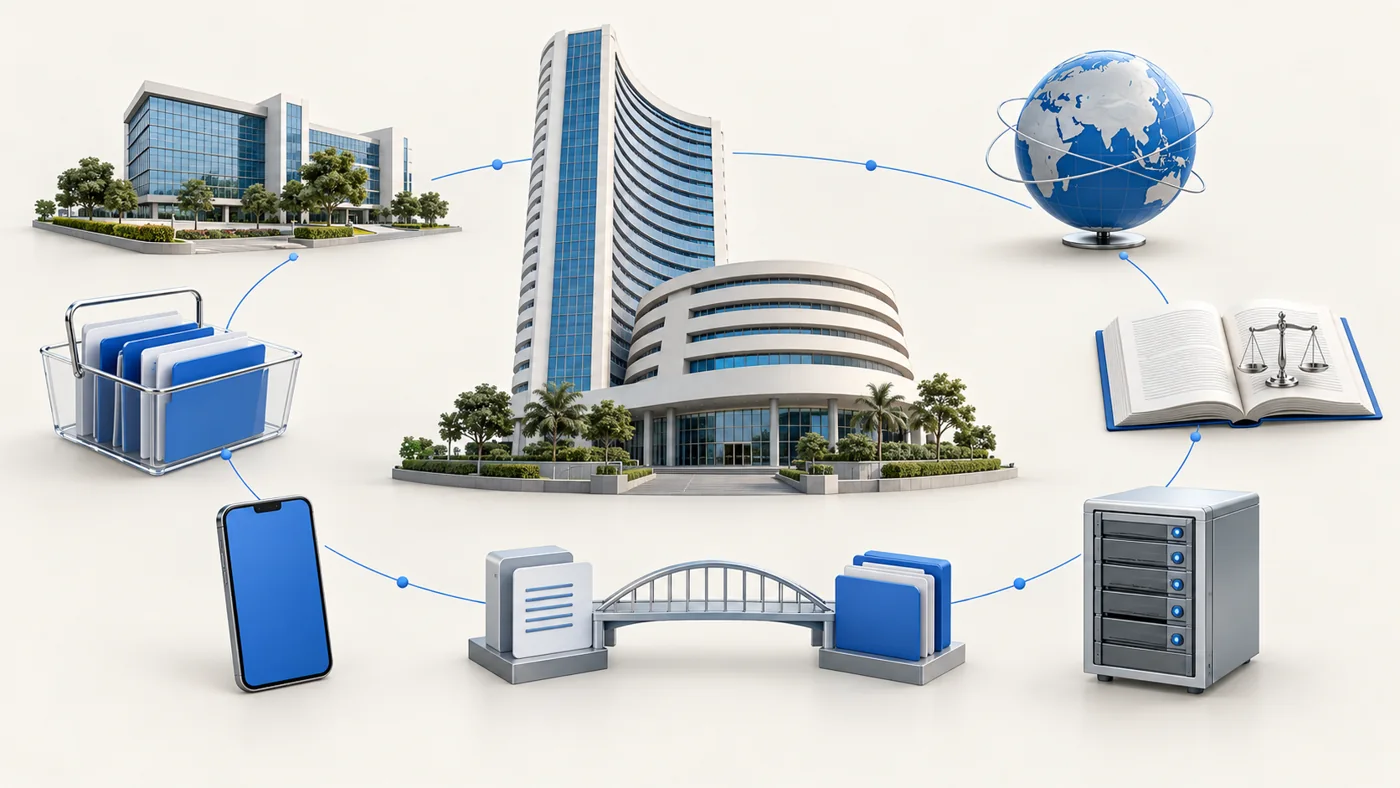 04BeginnerUnderstanding Market ParticipantsThe market is a full house: individuals, mutual funds, insurers, foreign investors, company owners, traders, brokers, exchanges and regulators each have a seat. With real, dated figures for ITC, the Jio Platforms IPO and the whole NSE market, see who sits where, whose money it is, and who only provides the service.18 min
 05BeginnerSEBI & Investor ProtectionUnderstand SEBI's role, verify intermediaries and payments, safeguard securities accounts, gather evidence, use SCORES and online dispute resolution, and distinguish conditional default compensation from market losses.30 min
 06BeginnerEssential Market TerminologyLearn the words by reading a real screen. Every term is pinned to a real number from ITC on NSE on Monday 19 October 2026, with Apple on Nasdaq for the same day where the data exists: quotes, orders, liquidity, profit and loss, valuation, funds and settlement.26 min
Unit 2 · Getting Set Up
 07BeginnerThe 3 Accounts: Bank, Demat & TradingMr. Chartist opens his accounts: HDFC Bank as his bank, Sahi (Aaritya Broking) as his broker, and a CDSL demat account through Sahi. Learn what each account does, the KYC stamps on the way, what you sign and what to check before you add money.17 min
 08BeginnerBrokerage, Charges & TaxesRead one real-format contract note for one small ITC trade on NSE, line by line: brokerage, STT, the exchange fee, the SEBI fee, stamp duty, GST and the DP charge, each with its real rate and the body that receives it. Then see which yearly tax rules apply. Rates checked 21 October 2026.24 min
 09BeginnerMarket Timings & Settlement ExplainedA trade is matched in a moment, but shares and money move on a calendar. Follow one real week: ITC bought on Monday 19 October 2026, a Dussehra holiday on Tuesday, and settlement on Wednesday 21 October, with the pre-open and closing auctions, pay-in and pay-out on the way.21 min
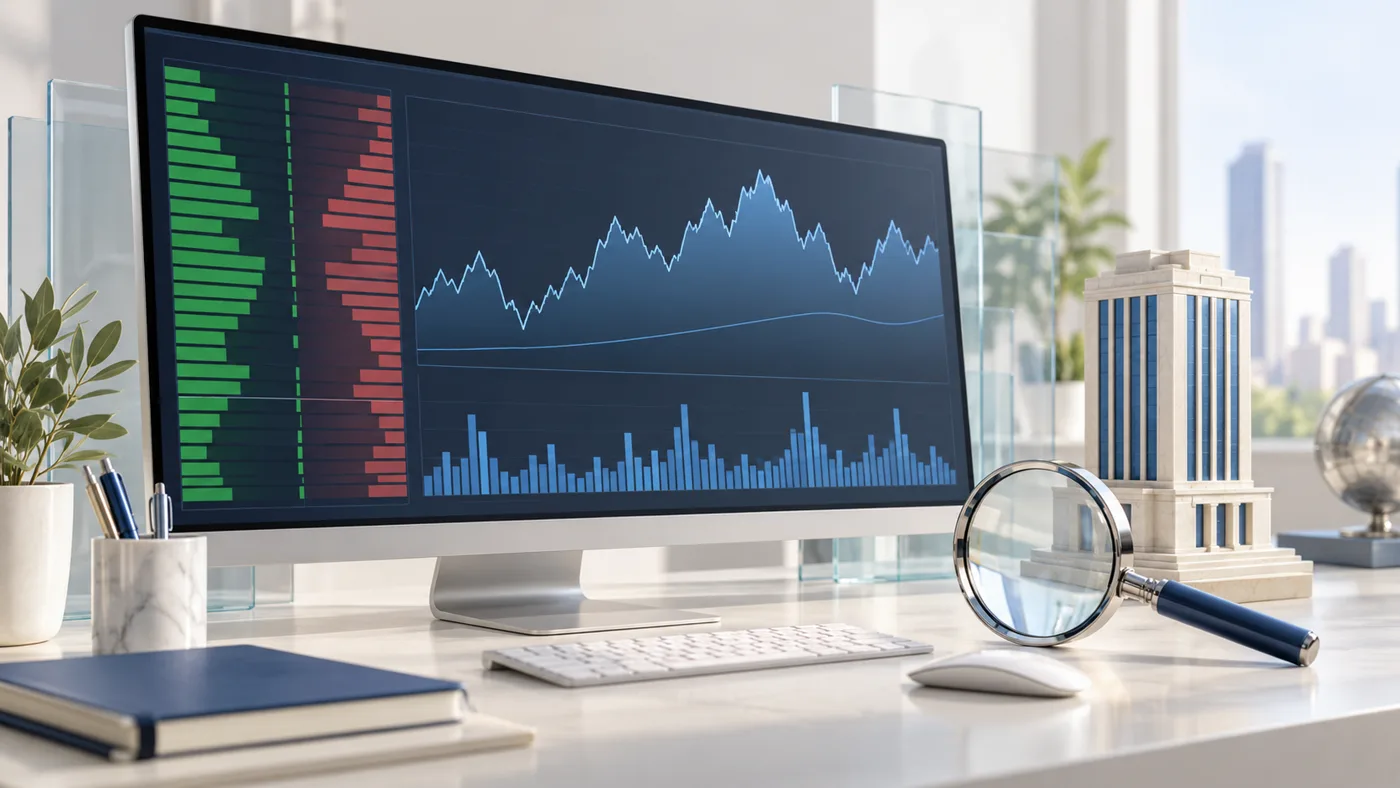 10BeginnerHow to Read a Stock QuoteA quote page mixes four kinds of information: trades that already happened, orders still waiting, past ranges and trading rules. Read NSE's ITC quote for 19 October 2026 one field at a time and see which question each field answers. Order-book quantities are illustrations.26 min
 11BeginnerPlacing Your First OrderMr. Chartist fills in one order ticket for 10 ITC shares on NSE and tests each order type against ITC's real price range on Monday 19 October 2026: which orders could fill, which never would, and why. Exchange rules and Sahi's own features are kept apart.22 min
 12BeginnerZero to First TradeRehearse one cash-market delivery order with a fictional Mr. Chartist teaching character. Follow the money, accounts, quote, order fields, execution, settlement, costs and review. Understand the whole process on paper before deciding whether a real transaction fits your circumstances.16 min
Unit 3 · Reading the Market
 13BeginnerUnderstanding Market IndicesAn index is a weighed basket of shares. On 19 October 2026 the Nifty 50 closed at 22,888.95, down 1.11%, and HDFC Bank alone carried 10.38% of the basket. See what is in the basket, how each share is weighed, and how one share's move tips the whole number.19 min
 14BeginnerMarket Cap & Stock CategoriesITC's share price was ₹260.80 on 19 October 2026; multiplied by its 1,253.05 crore shares, its market cap was about ₹3,26,795 crore. Put real companies on India's official size ladder, from Reliance at rank 1 onwards, and see what the label does and does not tell you.24 min
 15BeginnerCorporate Actions ExplainedCompany events can change what sits in your demat account without a trade. Six real events side by side, each as a holdings line before and after its record date: a dividend, a bonus, a split, a rights issue, a buyback and a demerger, and what changed in shares, cash and ownership.25 min
 16BeginnerIPOs — Initial Public Offerings ExplainedAn IPO runs on a calendar: documents, a price band, a few bidding days, an allotment and a listing day. Follow the Jio Platforms issue of October 2026 date by date, fill in a bid slip, and compare three finished IPOs' real listing days.28 min
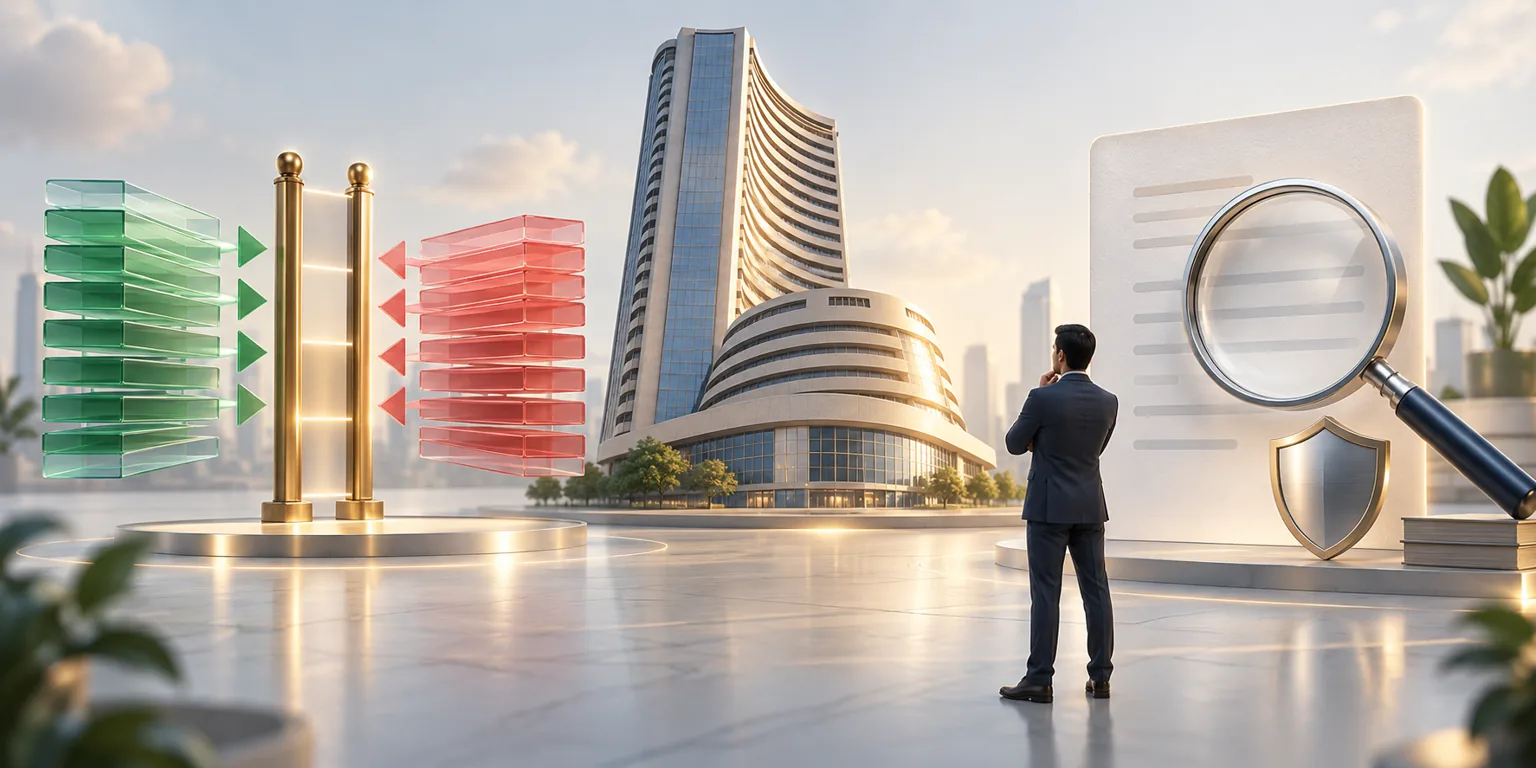 17BeginnerCircuit Limits & SurveillanceA price limit is a guardrail, not a wall. On 16 October 2026 HFCL closed on its upper limit and 31,800 trades still happened; on 15 October Sterlite Technologies sat on its lower limit all day. Follow real NSE days, the market-wide circuit breaker and the ASM and GSM surveillance lists.30 min
Unit 4 · Ways to Approach the Market
 18BeginnerTypes of Trading & Investment StylesFollow one real company, ITC, on two clocks: a trader's diary for one NSE session on 19 October 2026, and an investor's ledger for the twelve months before it, with ITC's real prices and dividends. Neither is the better one; both need a written plan.20 min
 19BeginnerTechnical vs Fundamental AnalysisOne real company, ITC, seen two ways: its NSE chart fell from ₹309.65 on 21 April 2026 to ₹260.80 on 19 October 2026, while its 2025-26 results showed ₹20,286.42 crore of profit and a ₹14.50 dividend. See which questions each lens answers, where they meet, and what neither can tell you.20 min20BeginnerYour First Look at Charts & Price ActionA chart is a record of prices, not a crystal ball. Read real NSE charts of ITC and the Nifty 50, from 1 September 2025 to 19 October 2026, the price-action way: line, bar and candle, trend, zones and volume. Every level marked is a reading in hindsight, not a signal.20 min
 21BeginnerHow to Read an Annual ReportAn annual report is long, but it is not a maze. Read one real report, ITC's Report and Accounts 2026, tab by tab: the business review, the three statements and how they tie together, the notes, the auditor's report and who owns the shares.27 min
 22BeginnerHow to Research a StockBuild one real research file, on ITC, page by page: what the business does, the numbers that matter, who owns it, what the price implies, the risks and what is still open. Every fact is pinned to a filing on NSE or BSE. It is a method, not a view on the share.28 min
Unit 5 · Protecting Your Money and Mind
 23BeginnerRisk Management 101First set aside money you need for other things. Then decide how much one trade may lose, turn that into a share count, and check what can go wrong after the order is placed: gaps, thin trading, leverage and drawdowns. Every price is a real ITC price on NSE.27 min
 24IntermediateMargin, Leverage & PledgingA bigger buying-power number is not more cash. On 19 October 2026 ITC fell 1.02%: paying in full lost 1.02% of the money, 5x intraday leverage lost 5.12%. Follow that one real day through margin, borrowing, pledged shares with their haircut, and what you still owe.18 min
 25BeginnerAsset Allocation BasicsWeigh a plan with one real year. From 8 October 2025 to 8 October 2026 the Nifty 50 fell 11.24% while gold rose 18.81%. A teaching ₹10,00,000 split 60/30/10 drifted off target, and rebalancing moved the weights back.18 min
 26BeginnerTrading Psychology for BeginnersFive common biases, each seen in a real market moment: ITC's fall from ₹426.40, its 1 January 2026 excise-duty drop, the Nifty 50's 11% fall in a year, and SEBI's studies of traders' losses. Notice the pressure, check the evidence and your exposure, then decide whether to act, pause or stay out.24 min27Beginner12 Beginner Mistakes That Drain CapitalA pre-flight checklist of twelve mistakes, each one checked before an order, during a trade or after the close. Each line opens a real record: SEBI's studies of F&O and intraday traders, SEBI orders against unregistered advisers and a pump-and-dump scheme, depository rules on OTPs, and the real charges from lesson 08.20 min
Unit 6 · Building the Habit
 28BeginnerBuild Your First Watchlist & Daily RoutineA watchlist turns a crowded market into a short list to study. Build one row by row from companies met in this course (ITC, HDFC Bank, Reliance, Infosys, TCS and Jio Platforms), with real NSE closes from 19 October 2026, an event calendar, alerts and a daily review. None of it is a reason to buy or sell.28 min
 29Beginner17 Stock Market Movies, Series & Documentaries17 finance stories from 1983 to 2023, each set beside the real market event it is about and the date it happened: the year, director, length and certificate of each title, one money idea to learn from it, and one question to take away. Some are fiction, some retell real events, some are documentaries.18 min
 30Beginner16 Indian Finance Movies & SeriesSixteen Indian films and series as ticket stubs. Six point to a real event, such as the 1992 securities scam, the Telgi stamp-paper case and demonetisation, and each stub sits beside the dated record of what courts, regulators and reporters actually found.18 min
That is the whole curriculum.
The other modules open here one at a time. The research pages and the ChartBook archive are where the reading meets real charts.