

Lesson 02
How the Stock Market Began
Owners who needed a way out, and a place where buyers gathered: a bridge in Amsterdam, a banyan tree in Bombay, and now the phone in your hand.

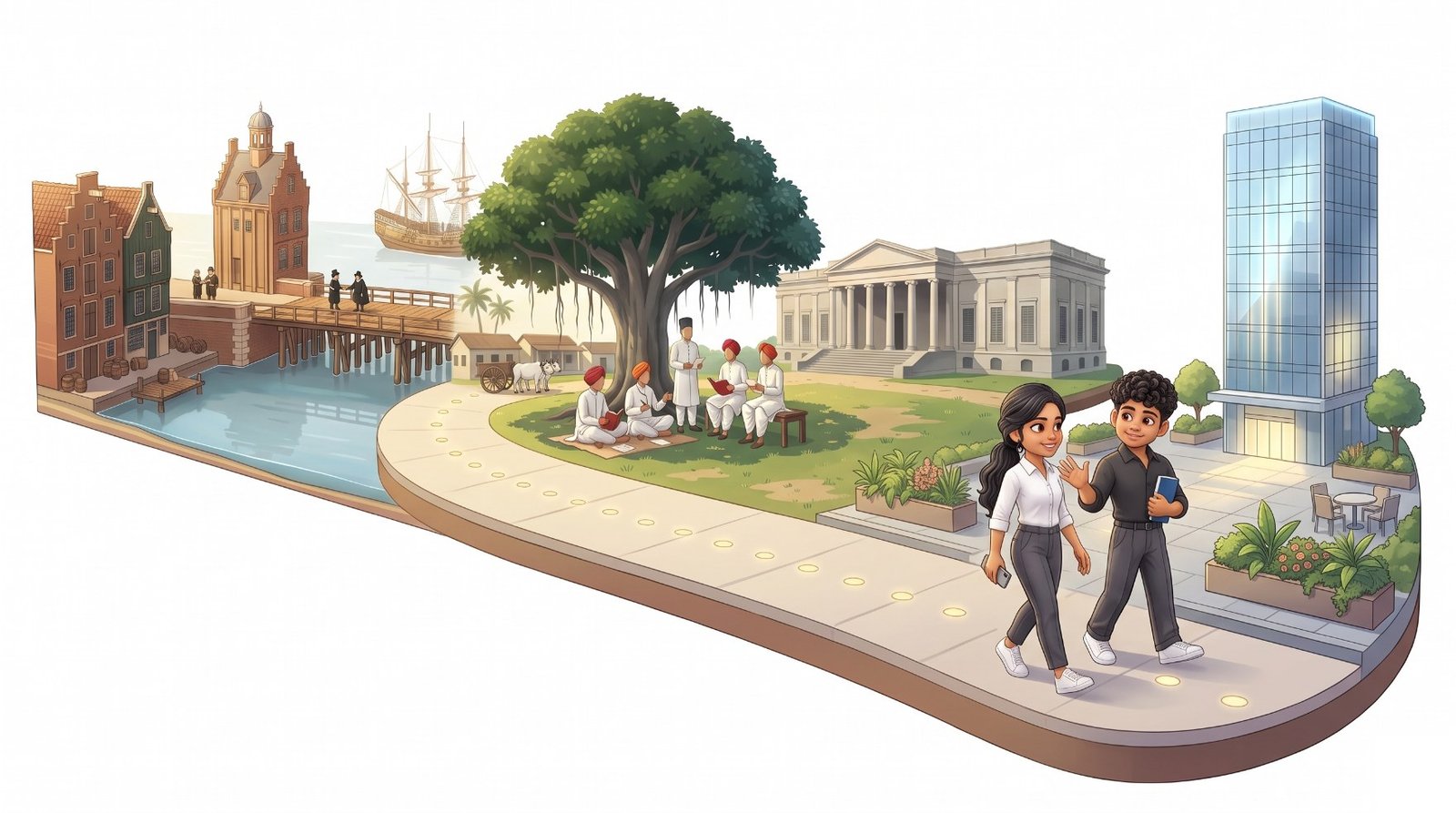
The stock market began with owners who needed a way out. In 1602 the Dutch East India Company sold shares to the public in Amsterdam and let owners sell them to each other, so buyers and sellers gathered on a bridge. London, New York and Bombay (today's Mumbai) followed the same road: a crowd in one spot first, then a building, a price list and rules.
The lesson before this one, why the stock market exists, followed Maya's burger restaurant and her investor. The restaurant could not hand his money back without hurting itself, so to get his money out he had to sell his share to someone new. One public meeting place, the stock market, makes that easy by bringing buyers and sellers together. This lesson follows that need for a way out back in time, in two chapters: first the road from Bruges and Amsterdam to London, New York and a banyan tree in Bombay, then India's road from that tree to the phone in your hand. Indian figures are counted the Indian way: one crore is 10 million.
Where Stock Markets Began
The same problem, solved again and again

My investor can sell his piece to a new buyer. But who invented that? Some banker in Mumbai?
Nobody invented it. The same problem kept coming back, city after city, and each one added a fix.
So where did it show up first?
Amsterdam, 1602. The Dutch East India Company took money from the public for voyages that lasted years, and never paid it back.
So those owners were stuck, exactly like my investor!
Stuck, until they sold to each other on a bridge. Watch what each city adds as we walk the road.

The problem from the last lesson, an owner whose money is locked inside a business, is more than four hundred years old. In 1602 the Dutch East India Company, the VOC, asked the public to share the cost and the risk of trading voyages to Asia that would take years. In Amsterdam alone people signed up. Counting the shares sold in other Dutch cities too, the company raised about 6.4 million guilders in all, the Dutch money of the day: money it kept working in ships and trade instead of handing it back.
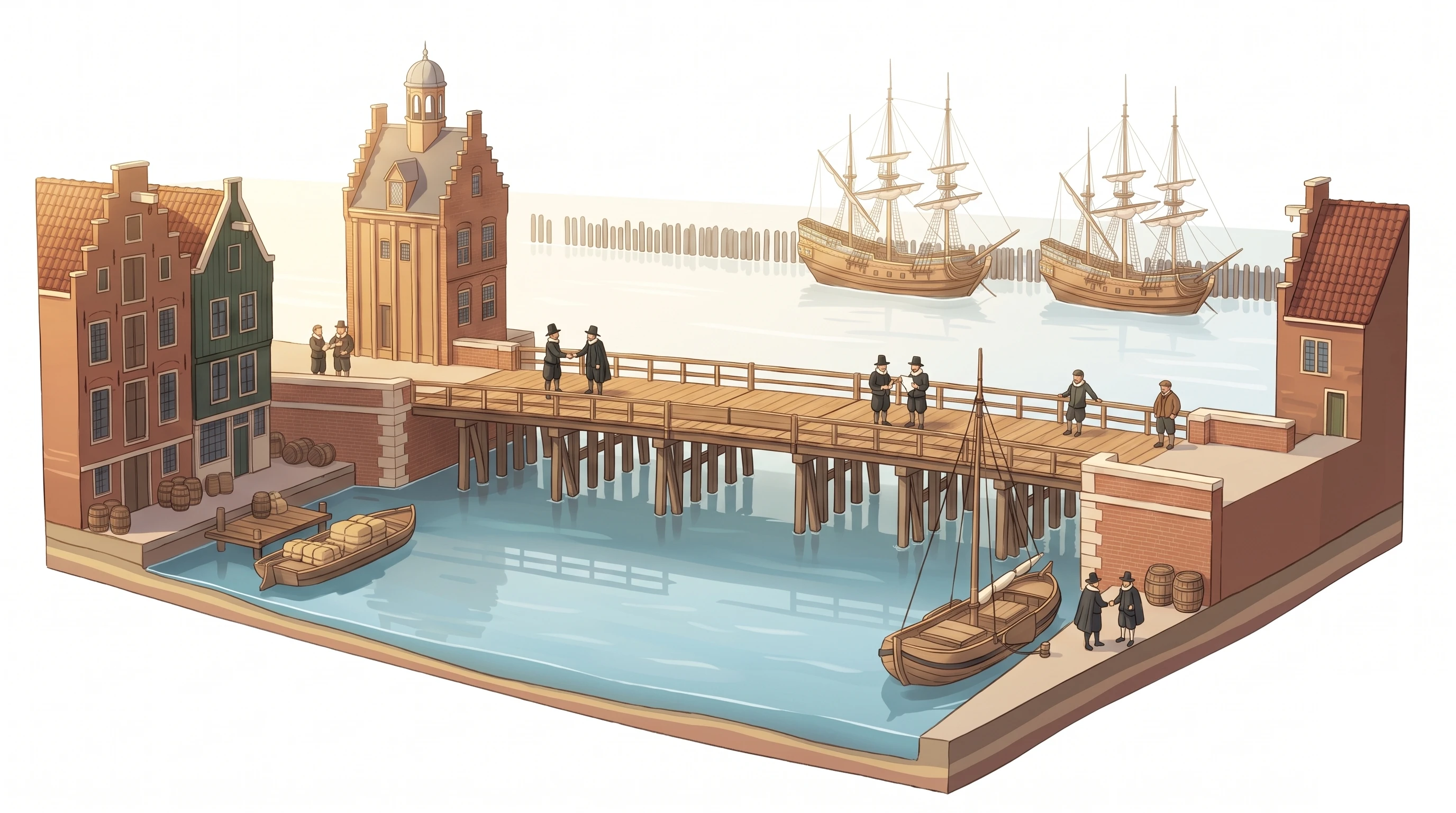
Its owners took the same way out as Maya's investor: they sold to each other. The company's charter, its founding document, let a share pass to a new owner through the company's bookkeeper: once buyer and seller agreed, the bookkeeper wrote the buyer's name in the company's books. So buyers and sellers met in the street and on Amsterdam's New Bridge, and from in an exchange building of their own. VOC shares became the first to trade freely, day after day.
Figure 1Where it began
The same idea in city after city
- The Van der Beurze inn“bourse” is usually traced to it
- Merchants of many nationsgoods, bills of exchange, news
- The Genoese lodgeon the square's corner, 1399
1400s
BrugesBelgium
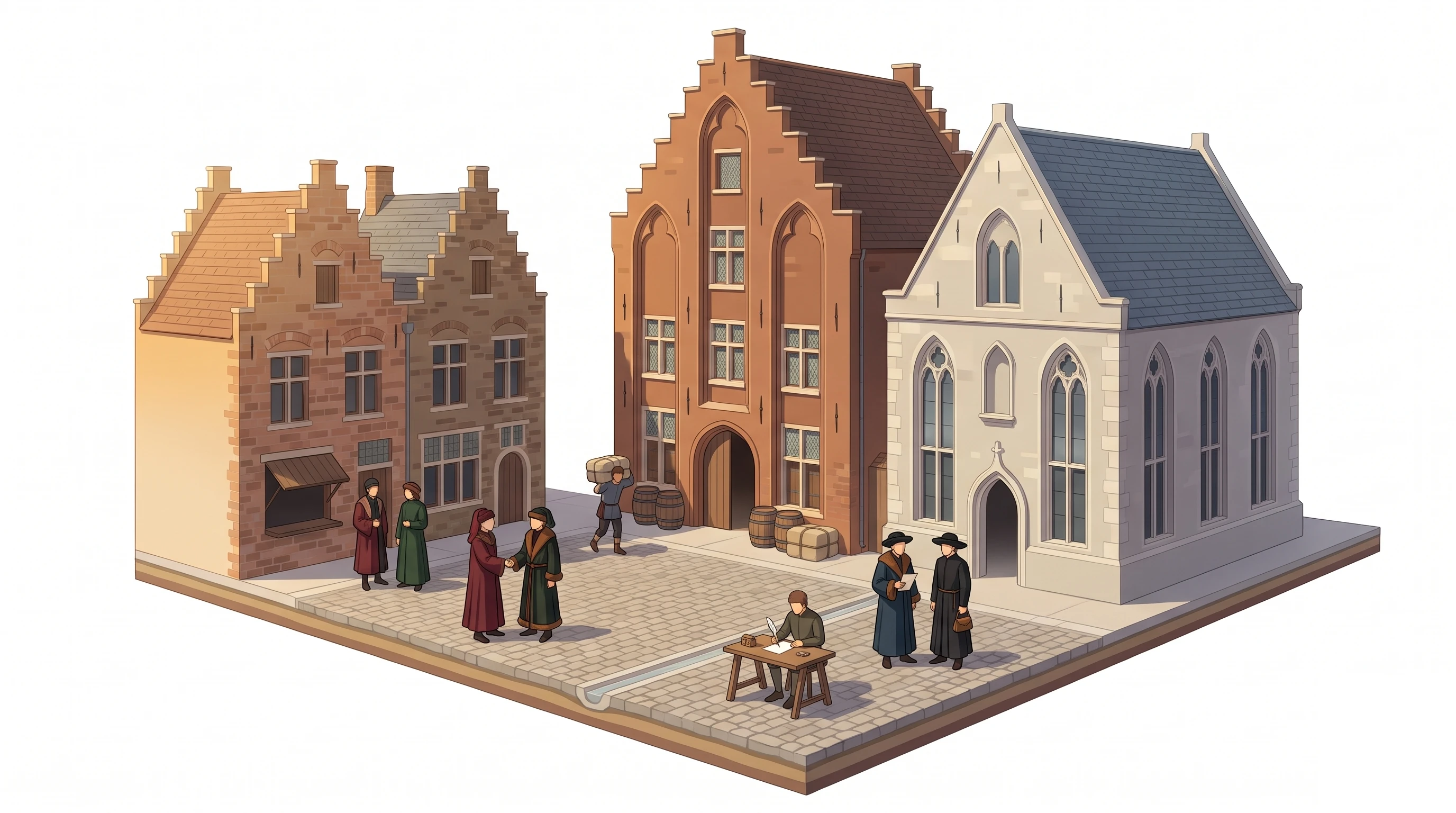
Merchants meet outside an inn
From about 1285 the Van der Beurze family kept an inn in Bruges. By the 1400s, merchants from Venice, Genoa, Florence and beyond met on the square outside it every day to trade goods, bills of exchange and news. No company shares changed hands here yet.
Traders from Genoa, Venice and other cities kept their own houses beside the square, and the Genoese lodge of 1399 still stands on its corner.
1531
AntwerpBelgium
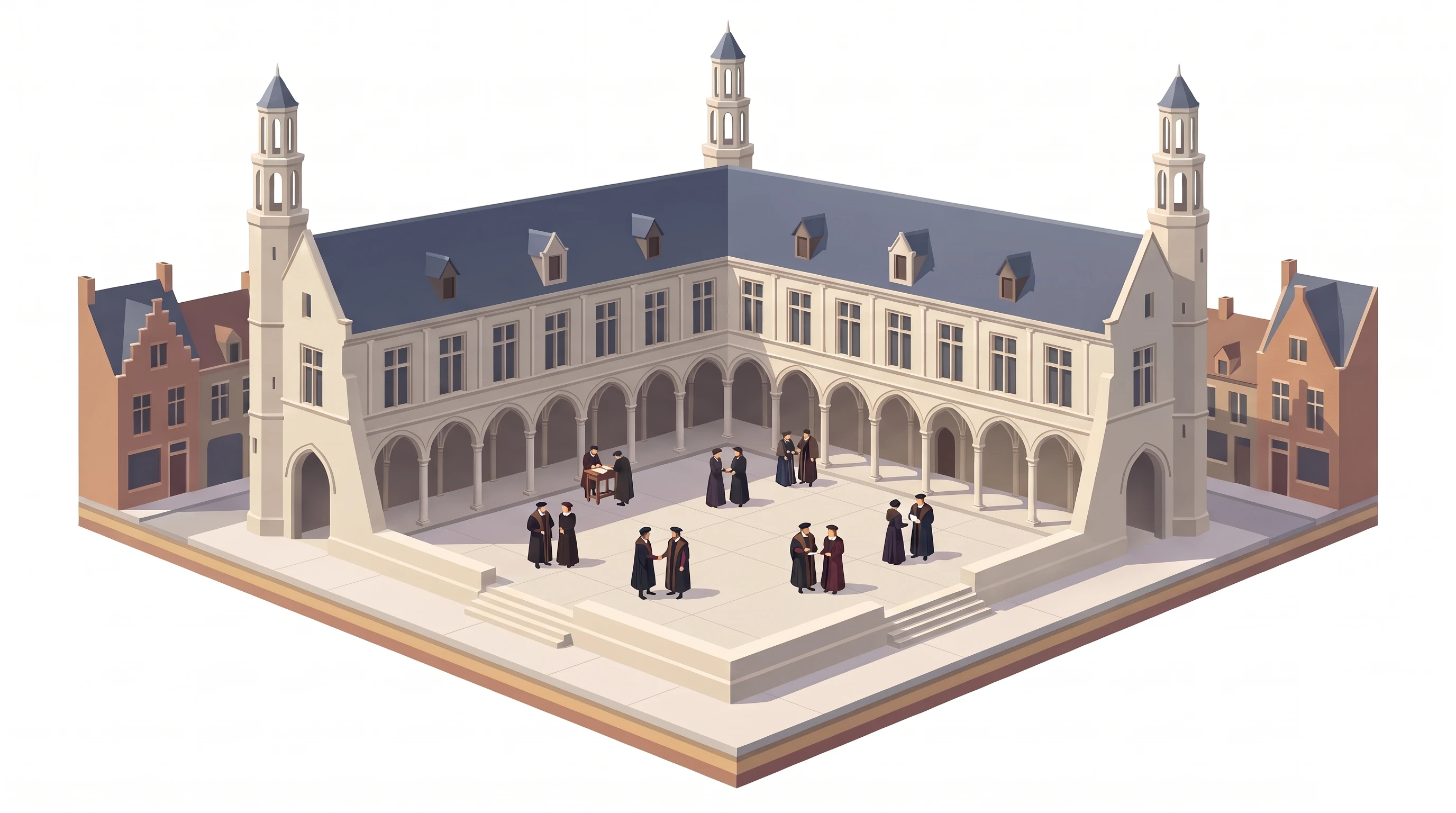
A building made just for trading
Antwerp's new exchange was a courtyard open to the sky, ringed by covered galleries, built for merchants of every nation. It traded goods and bills of exchange, not shares.
In Bruges, merchants had met out on a square; here, for the first time, they met inside a building made for trading. Shares still had no market of their own.
1602
AmsterdamNetherlands
Shares anyone could buy, for voyages of many years
The Dutch East India Company, the VOC, asked the public for money to run fleets to Asia for years, and never paid it back. In Amsterdam alone 1143 people subscribed.
Owners who wanted their money sold their shares to each other, in the open air on the New Bridge.
A deal was simple: a buyer and a seller agreed a price on the bridge, and the VOC's bookkeeper wrote the buyer's name in the company's books. The share had a new owner, and the company kept its money.
1611
AmsterdamNetherlands
Trading moves indoors
Nine years after the VOC's first shares, trading moved off the street and the bridge: in 1611 an exchange designed by Hendrick de Keyser opened, built over the water, and buyers and sellers met in its courtyard every day.
The exchange was built from 1608 to 1611. Buyers and sellers now met in one courtyard and agreed prices face to face, and the bookkeeper still recorded each new owner.
1698
LondonEngland
A price list anyone could read
London's brokers, people who bought and sold shares for their clients, gathered in the coffee houses of Change Alley. From Jonathan's Coffee House, John Castaing published a regular list of prices, The Course of the Exchange, so anyone could see what shares were selling for. In 1773 the brokers named a house of their own The Stock Exchange.
Brokers met their clients in Change Alley's coffee houses, and anyone could check Castaing's list before dealing.
1792
New YorkUSA
Twenty-four brokers agree on rules
On 17 May 1792, 24 New York brokers signed the Buttonwood Agreement: they would trade with each other first and charge their clients a fee, called a commission, of at least a quarter of one per cent. Legend says they signed under a buttonwood tree; historians doubt that part. That small group grew into the New York Stock Exchange.
In 1817 the brokers adopted a constitution and a name, the New York Stock & Exchange Board, called the New York Stock Exchange from 1863.
- A banyan treethe brokers met in its shade
- Bombay's Town Hallthe tree stood in front of it
- Bombay's brokersin 1875, an association: BSE
1850s
BombayIndia
India's turn: brokers under a banyan tree
Bombay's share brokers met under a banyan tree in front of the Town Hall. On 9 July 1875 they formed an association, the start of today's BSE (Bombay Stock Exchange), Asia's oldest stock exchange.
Deals were made by word, face to face, in the tree's shade. The next chapter follows India's road on from this tree.
- The first freely traded shares
- 1602
- the Dutch East India Company, Amsterdam
- 24 brokers sign an agreement
- 1792
- New York; signing under the tree is legend
- Asia's oldest stock exchange
- 1875
- Bombay's brokers form today's BSE
A crowd, then a building, a price list, rules. Each city fixed one more part of the problem?
Exactly. Bombay took the same road, from a banyan tree to Asia's oldest stock exchange. Now let's follow India's.
The road below starts even earlier, in Bruges and Antwerp. Merchants there already met to trade goods and bills of exchange (written orders to pay money later, often in another city), but not shares. The word bourse, another name for an exchange, is usually traced to an inn in Bruges, and Antwerp opened a building just for trading in 1531.
Look at what each step on the road added. A crowd in one spot meant a seller no longer had to hunt for buyers one by one, the problem of the 1000 owners in the last lesson. A building of their own, like Amsterdam's exchange of 1611, gave that crowd a fixed home off the street, so buyers and sellers knew where to find each other every day. A price list, like the one John Castaing published from Jonathan's Coffee House in London in 1698, let anyone see what shares were selling for. Rules, like the Buttonwood Agreement that 24 New York brokers signed on 17 May 1792, set common terms for how the signers would deal with each other, so each of them knew how a deal among them would be done. Bombay's brokers took the same road: first a crowd under a banyan tree in the 1850s, then rules of their own in an association formed on , the start of today's BSE (Bombay Stock Exchange), Asia's oldest stock exchange.
India's Road: From a Banyan Tree to Your Phone
The same idea, faster, safer and open to everyone

Brokers under a banyan tree in the 1850s. How did that become an app on my phone?
In four big jumps: a trading ring, then screens, then demat, then the phone.
And before demat, shares were still paper in the post?
Until 1996, yes. A transfer took weeks, and certificates got lost or forged on the way.
So what changed, the idea or the way it's done?
Only the way. Same idea as under the tree, just faster, safer and open to everyone.

Owners who want money still sell to people who want to own, as they did under the banyan tree. How it is done has changed almost completely: for more than a century after 1875, every trade was struck by brokers meeting in person.
Until the mid-1990s, buying a share meant calling a broker, who shouted your order across a crowded trading ring, the floor where brokers bought and sold face to face. After the trade came the paper, as the last lesson showed: the certificate and a signed transfer form went by post to the company, which recorded the new owner. That took weeks, and certificates were lost, torn or forged on the way.
From the late 1980s, the market was rebuilt step by step. India's market regulator, the Securities and Exchange Board of India (SEBI), which writes the market's rules and enforces them, was set up in 1988 and gained legal powers in 1992. A new exchange, the National Stock Exchange (NSE), began India's first nationwide trading on screens in November 1994, and BSE's ring fell silent when it moved to screens in 1995. From , shares could be held electronically in a demat account instead of on paper. And since 27 January 2023, every Indian share trade has settled by default on the next working day, called T+1, T being the day of the trade. The road below follows each step.
Figure 2India's road
From a banyan tree to your phone
1850s
BombayIndia
Trading in person, in the open
Brokers met under a banyan tree in front of the Town Hall, and moved as their numbers grew. On 9 July 1875 they formed the Native Share and Stock Brokers' Association, the start of today's BSE.
Deals were made by word, face to face. In 1957 BSE became the first exchange recognised by the government, under the Securities Contracts (Regulation) Act of 1956.
1980
Dalal StreetBombay
A tower of its own on Dalal Street
In 1980 BSE's new home was completed on Dalal Street: Phiroze Jeejeebhoy Towers, still the exchange's head office and the picture most Indians see when the market is in the news.
Later in the 1980s a round, domed trading hall, the Rotunda, was added beside it, and brokers traded face to face there until screens took over in 1995.
- The trading ringonly badge holders could enter
- Hand signals and slipsbids and offers, shouted
- Clerks at the telephones
About 1990
BSEBombay
Orders shouted across a trading ring
Until the mid-1990s, BSE's brokers crowded round a ring under a domed hall and shouted bids and offers, the prices they would buy and sell at, with hand signals and paper slips. Only badge holders could enter the ring.
A client phoned a broker with an order, the broker shouted it in the ring, and paper slips recorded the deal; the certificates then went by post. In 1986 BSE launched the Sensex, one number that showed how 30 large companies moved.
- A broker's screentyped orders
- By satelliteVSAT dishes on office roofs
- NSE's hub in Bombayone market for all of India
1994
NSEall India
Screens across India, linked by satellite
In November 1994 NSE opened India's first nationwide screen-based trading. Brokers' offices joined through small satellite dishes linked to a hub in Bombay, so a broker in any town saw the same prices and typed orders instead of shouting them.
NSE, incorporated in November 1992, sent each typed order by satellite to its computer in Bombay, which matched it with the best price on offer.
1995
BSEBombay
The ring falls silent
In March 1995 BSE moved to screen trading with BOLT, BSE On-Line Trading. The shouting stopped, and the trading hall went quiet.
Brokers typed their orders into BOLT, and BSE's computer matched buyers and sellers.
1996
NSDLall India
Paper becomes an electronic balance
After the Depositories Act 1996, NSDL, India's first depository (the official record of who owns which shares), opened in November 1996 to end slow transfers and faulty or forged paper certificates. Owners handed in their certificates, and their shares became a balance in a demat account. A second depository, CDSL, followed in 1999.
From then on, a sale moved shares from one demat account to another as an entry in the depository's books, instead of a parcel in the post.
Today
AnywhereIndia
A tap on a phone, settled the next working day
An order is a tap in a broker's app. Since 27 January 2023 every Indian share trade settles by default on the next working day, T+1, and the shares land in a demat account.
The exchange matches the order in a moment; on the next working day the money reaches the seller and the shares reach the buyer's demat account.
The whole road, in one swipe
 1400sBrugesMerchants meet outside an inn
 1531AntwerpA building made just for trading
 1602AmsterdamShares anyone could buy, for voyages of many years
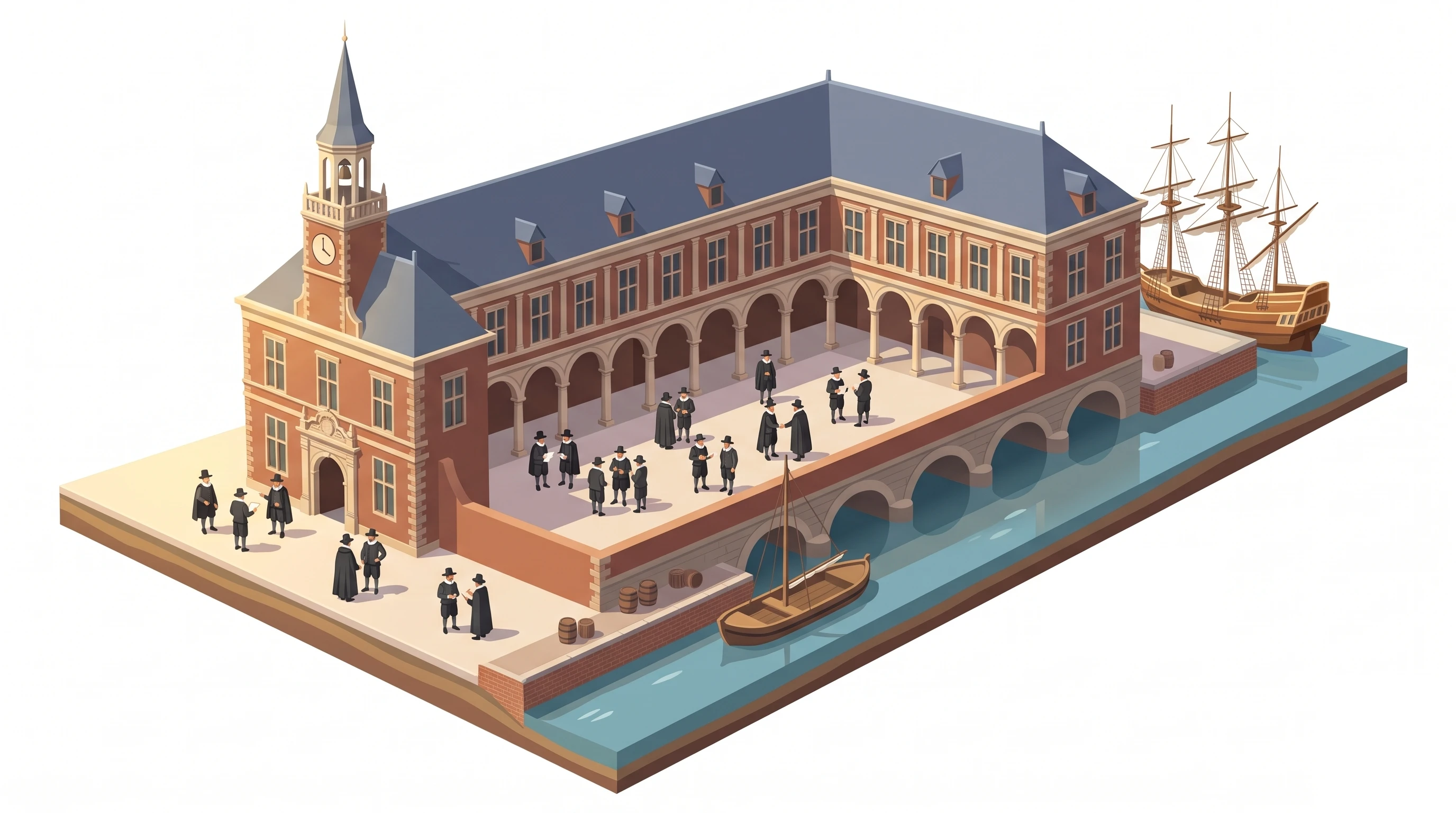 1611AmsterdamTrading moves indoors
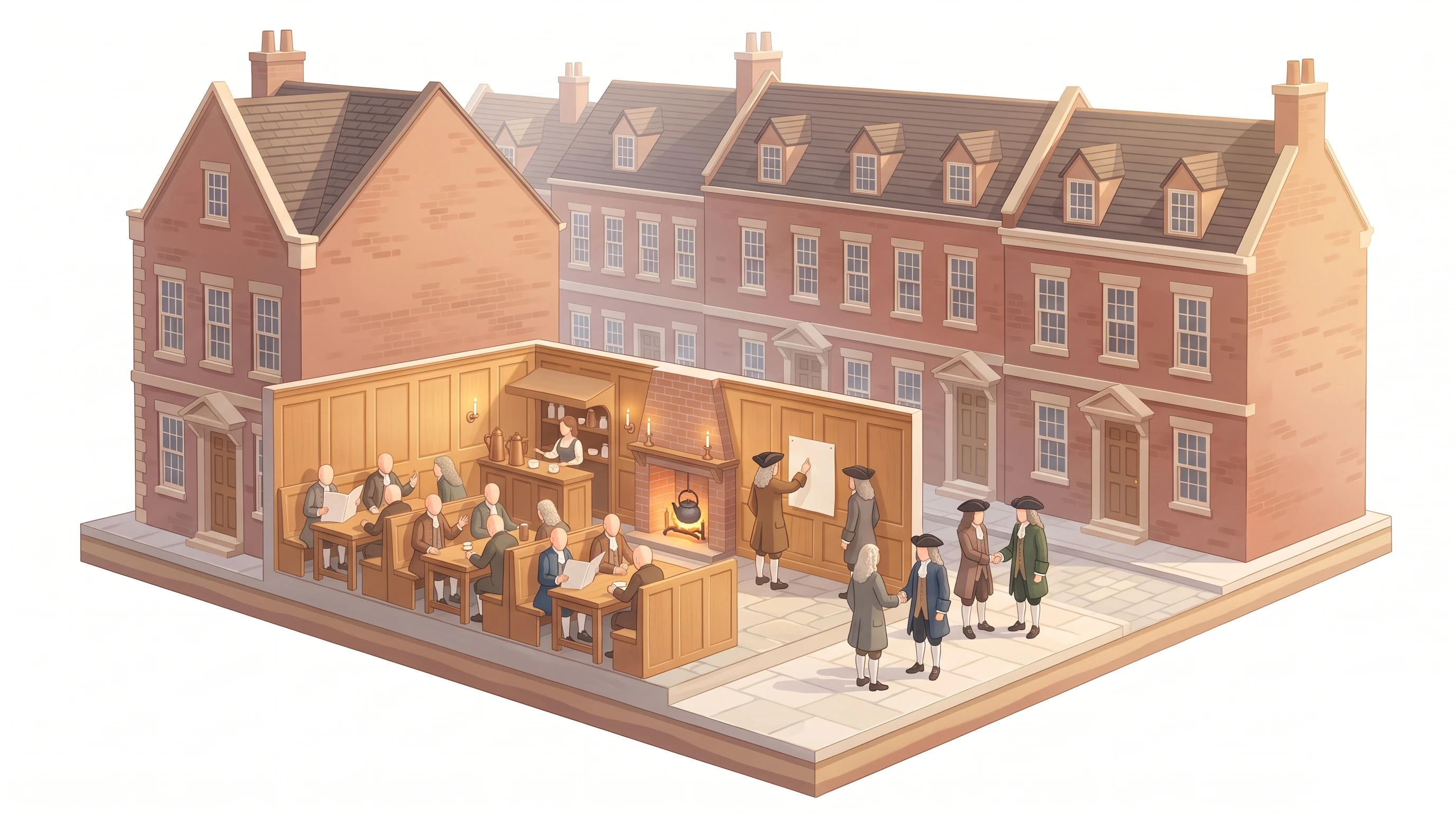 1698LondonA price list anyone could read
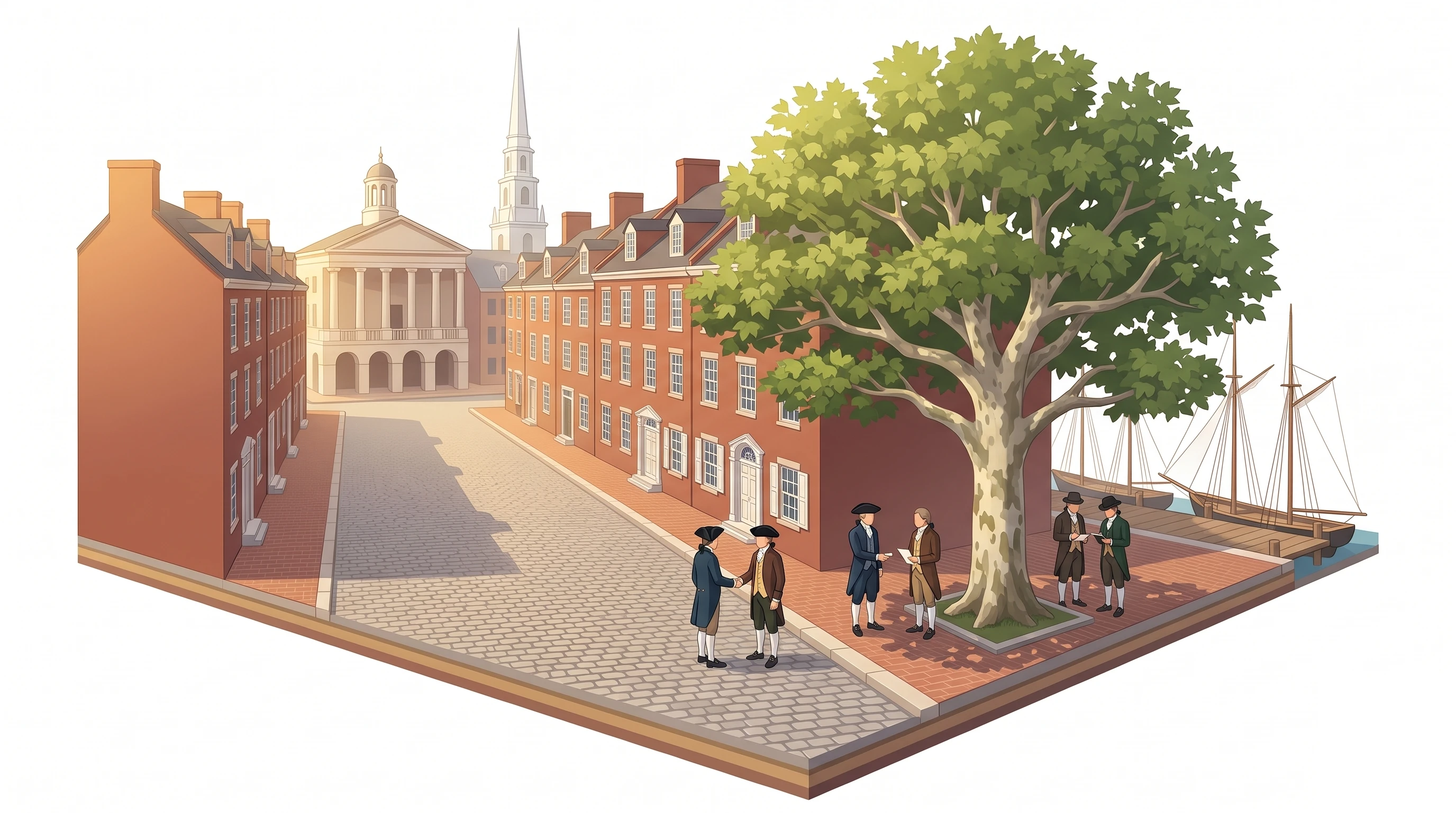 1792New YorkTwenty-four brokers agree on rules
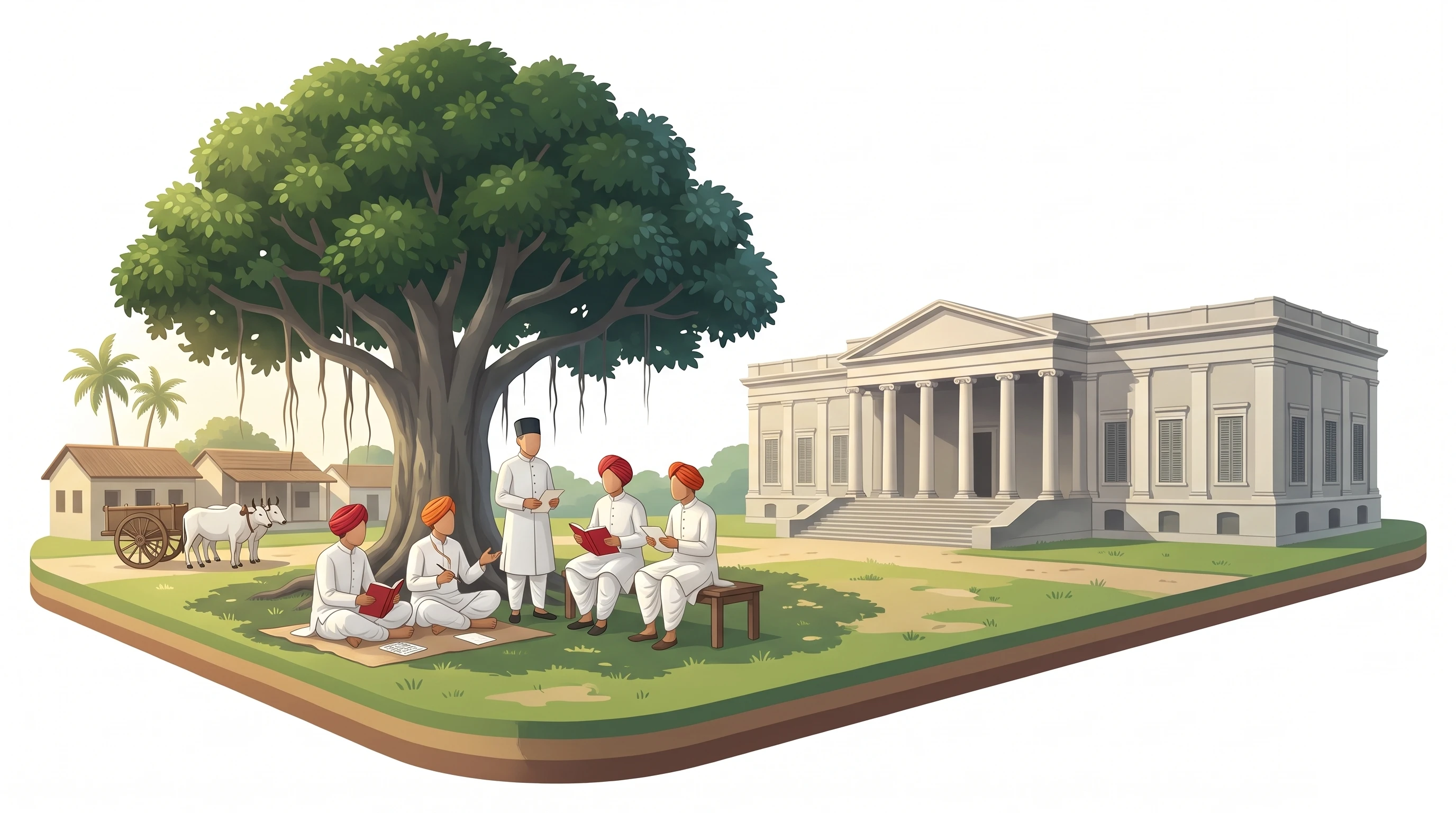 1850sBombayIndia's turn: brokers under a banyan tree
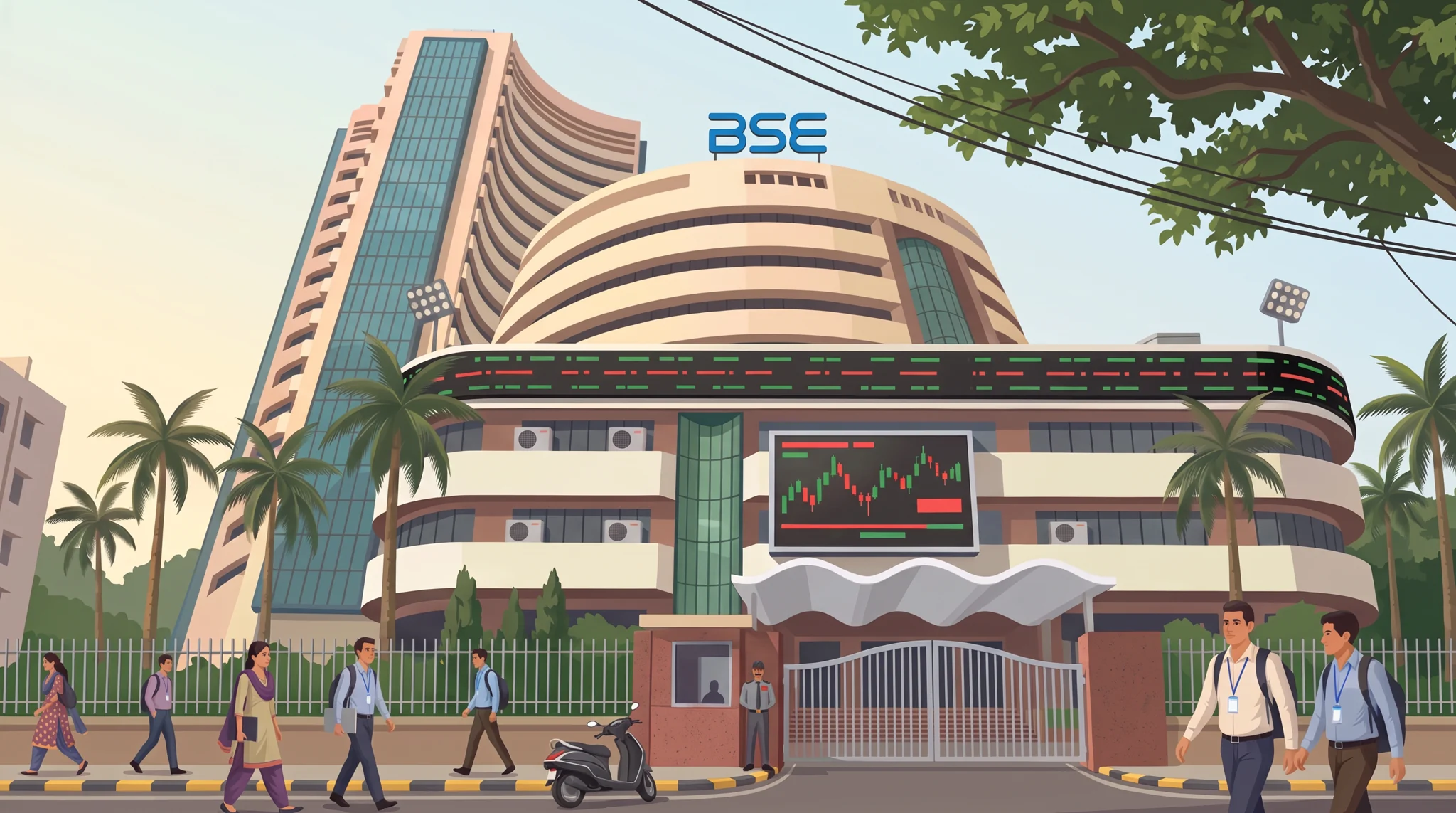
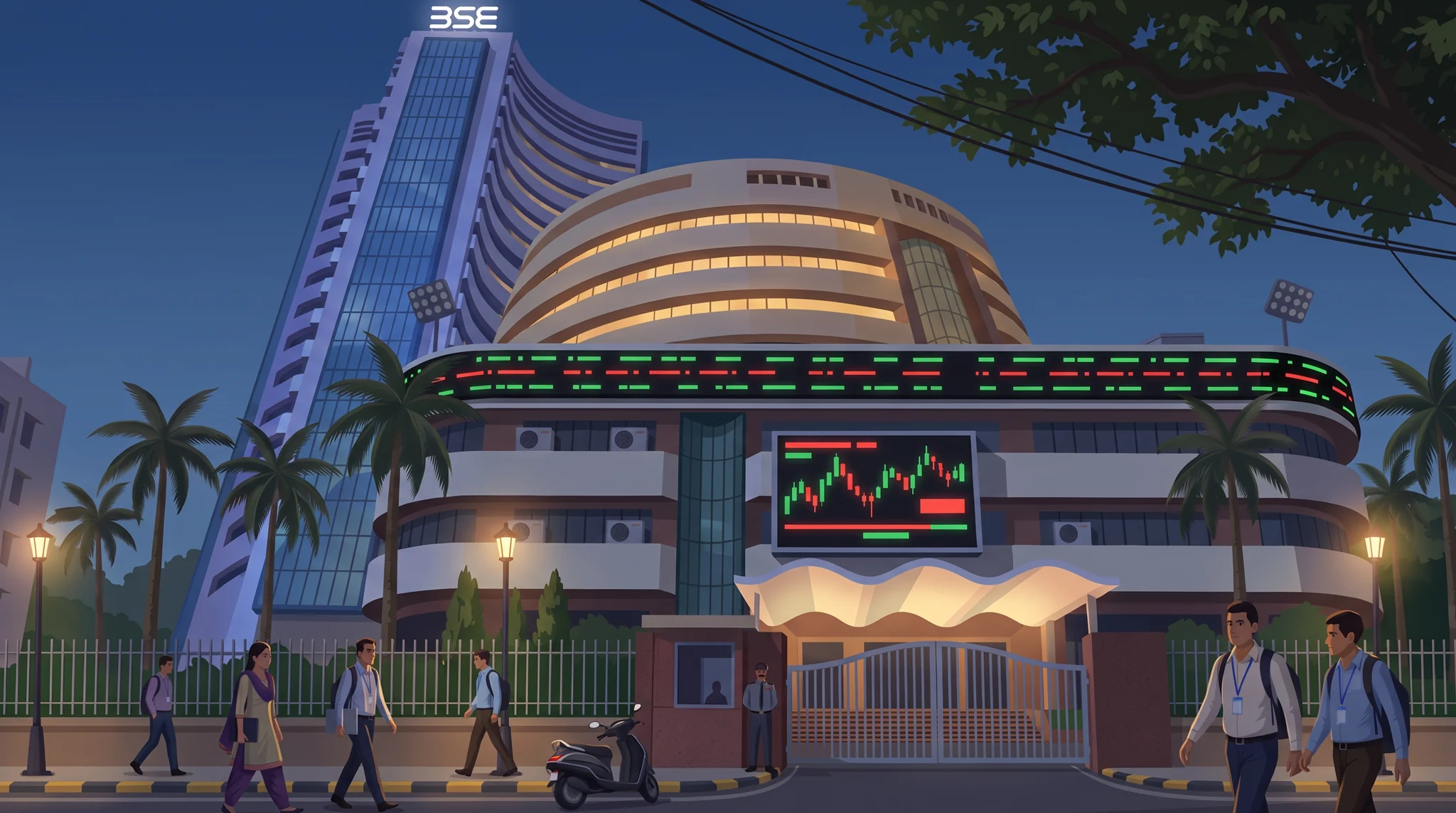 1980Dalal StreetA tower of its own on Dalal Street
 About 1990BSEOrders shouted across a trading ring
 1994NSEScreens across India, linked by satellite
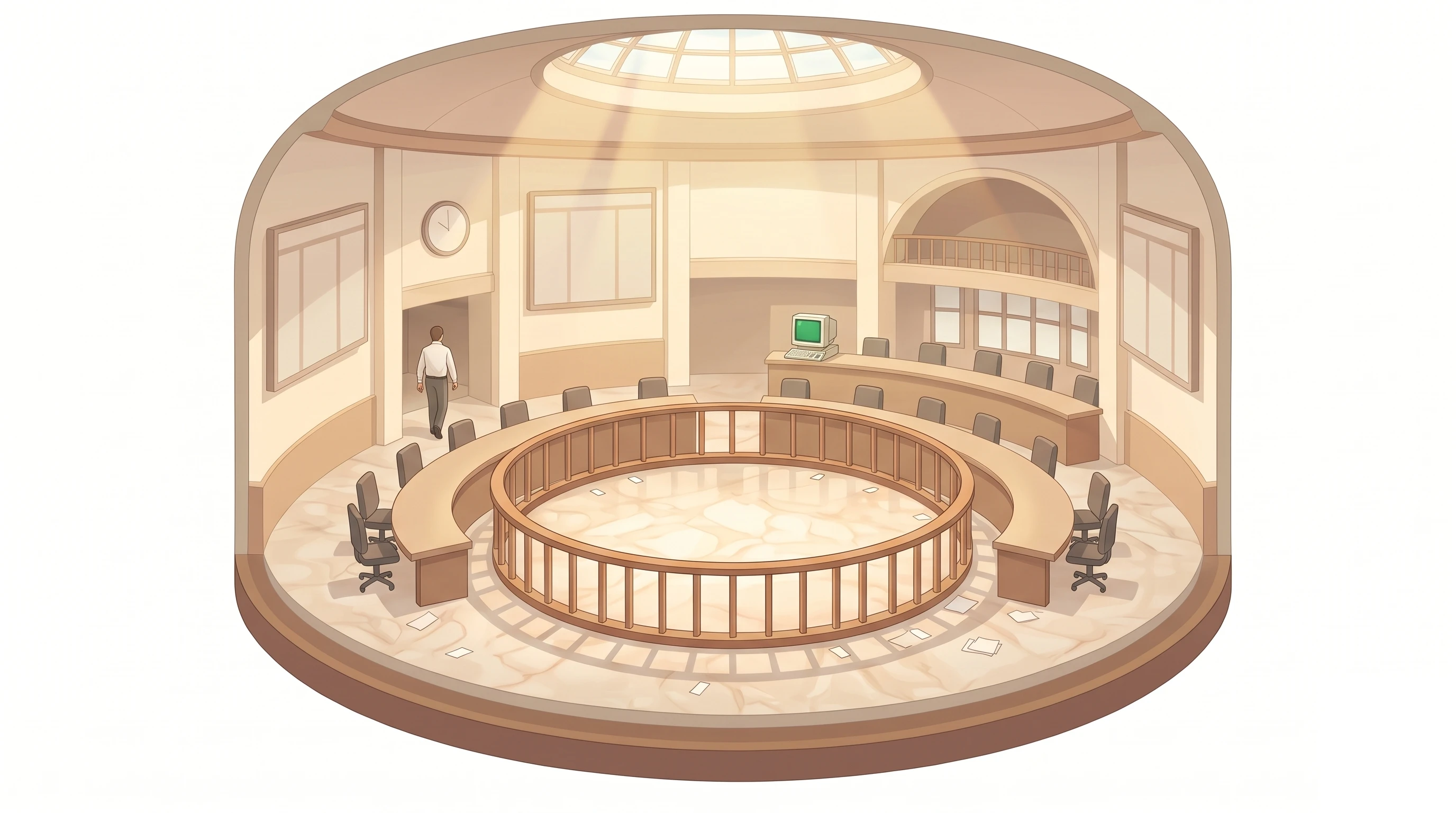 1995BSEThe ring falls silent
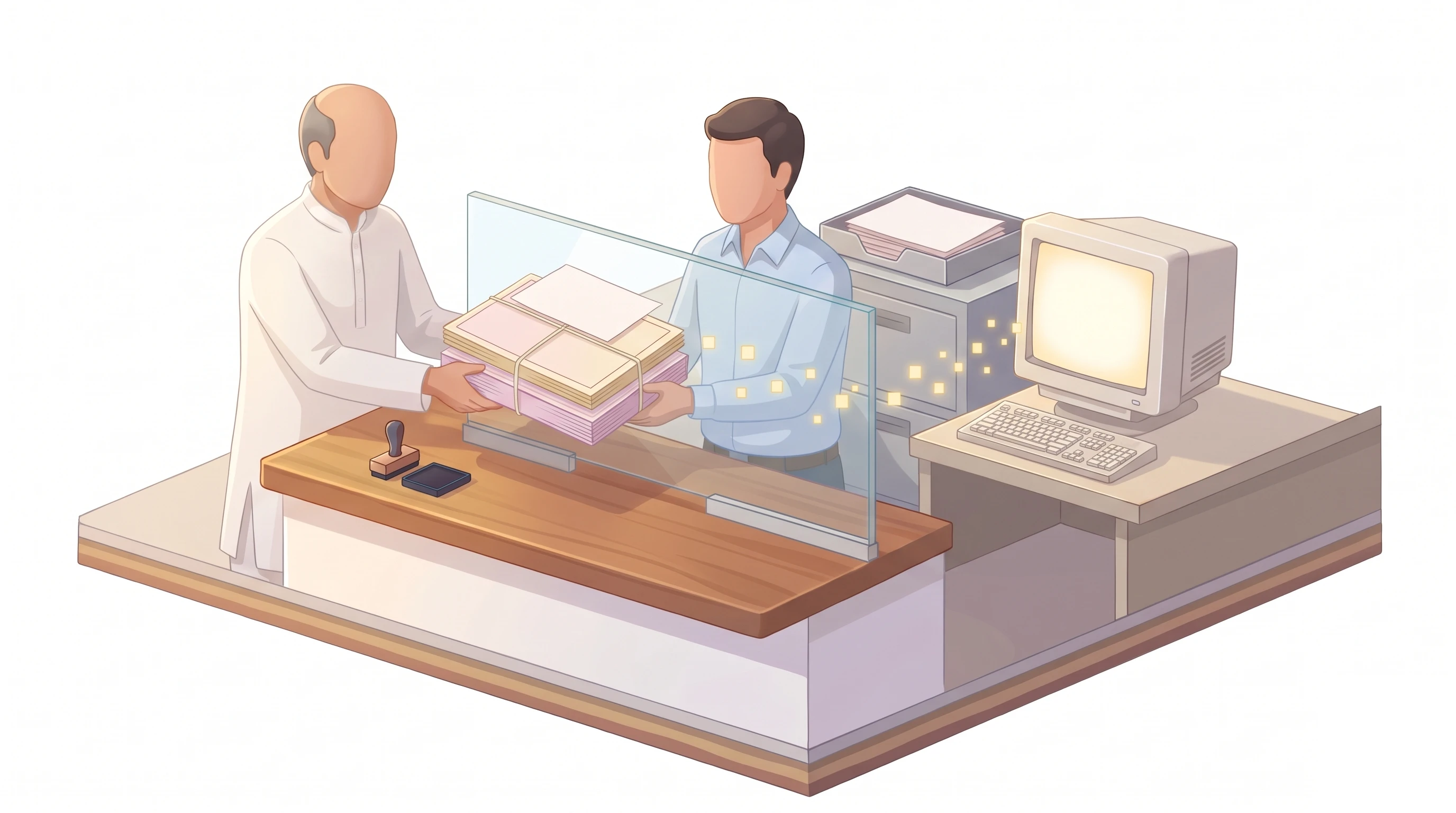 1996NSDLPaper becomes an electronic balance
 TodayAnywhereA tap on a phone, settled the next working day
- Brokers form an association
- 1875
- 9 Jul 1875, Bombay: today's BSE
- SEBI's legal powers
- 1992
- set up 1988; powers from 30 Jan 1992
- People on NSE
- 13.5crore
- unique investors, 31 Aug 2026
Faster and open to everyone. So how many people take part now?
About 24 crore demat accounts, but many people hold more than one. Counted once each, NSE finds about 13.5 crore people.
The result is a market no banyan tree could hold. At the end of September 2026, India had about (240 million) demat accounts. But one person can hold more than one account, so count the people too: NSE counted about (135 million) unique investors on 31 August 2026, each counted once by their tax ID, the PAN. Today a student in Kochi and a fund manager in Mumbai trade in the same market and see the same prices. What that market is made of, and who runs each part of it, is where the next lesson begins.
Before you go
Check yourself
4 questions from this lesson. Pick an answer to see why, then slide on to the next.
Question 1 of 4

Questions readers ask
Common questions
When and where did the stock market begin?
Shares first traded freely and continuously in Amsterdam, after the Dutch East India Company, the VOC, sold shares to the public in 1602. Its charter let a share pass to a new owner through the company's bookkeeper, so owners sold to each other in the street and on the New Bridge, and from 1611 in an exchange building. Bruges and Antwerp had merchants' meeting places earlier, but they traded goods and bills, not shares. Why owners needed that way out is explained in why the stock market exists.
What was the Buttonwood Agreement?
An agreement among New York's brokers, counted as the start of the New York Stock Exchange. On 17 May 1792, 24 brokers signed it to trade with each other by common rules. Tradition says they signed under a buttonwood tree on Wall Street; historians doubt that part, but the agreement is real. In 1817 the brokers adopted a constitution and a name, the New York Stock & Exchange Board.
Which is the oldest stock exchange in Asia?
BSE in Mumbai. In the 1850s brokers traded under a banyan tree in front of Bombay's Town Hall, and on 9 July 1875 they formed the Native Share & Stock Brokers' Association, the start of today's BSE. Tokyo's exchange followed in 1878. BSE moved from its trading ring to screens in 1995.
When did Indian shares move from paper to demat?
From 1996. The Depositories Act of 1996 allowed shares to be held electronically, and NSDL, India's first depository, began operations in November 1996; CDSL followed in 1999. Before that, a paper certificate went by post and took weeks to transfer. Today trades settle on the next working day, T+1, the default for all Indian shares since 27 January 2023. See the three accounts you need: bank, demat and trading.
Words to keep
The 8 words this lesson used, in plain English
Share
One equal piece of a company's ownership.
A business is split into equal pieces. Owning one piece means owning that part of the business: a part of its profits and a say in big decisions. The more pieces you hold, the bigger your part.
In lesson 01Maya's restaurant in ten equal pieces: one piece, ₹1 lakh, is 10%.