The Ultimate Guide: 17 Best Stock Market Movies, Web Series & Documentaries
Master market psychology, risk management, and financial history through cinema.
- Phase
- 1 of 5
- Market Foundations
- Reading time
- 18 min read
- 17 chapters
- Level
- Beginner
- No experience needed
Markets are driven by people, and people act on fear and greed. Films and series show these feelings at work more vividly than any textbook.
In *Margin Call* you see a bank discover it has taken too much risk. In *Scam 1992* you see how a market was manipulated. In *The Big Short* you see what it costs to be right too early. Each is a case study, though a dramatised one.
This list has 17 feature films, web series and documentaries, each with the market lesson it teaches. Ratings and streaming platforms change over time and differ by country, so any rating or platform marked Needs verification should be checked on IMDb, Rotten Tomatoes or a current streaming guide. These are educational notes on films, not advice on any security.
Markets can remain irrational longer than you can remain solvent.— Commonly attributed to John Maynard Keynes (Needs verification)
1. The Big Short (2015)
A masterclass in contrarian thinking, CDO risk, and housing market shorts.
1. The Big Short (2015)
Based on Michael Lewis's bestselling book, *The Big Short* follows a few unconventional investors, including Dr. Michael Burry (played by Christian Bale) and a fund manager based on the real Steve Eisman (the character is named Mark Baum and played by Steve Carell). They saw early that the US subprime mortgage market (home loans given to borrowers with weak credit) would collapse around 2007-2008.
They bought credit default swaps (CDS), which work like insurance that pays out if a bond fails, on bonds built from those risky home loans. Most of Wall Street believed house prices could never fall across the whole country.
For traders, the film shows how painful it is to hold a correct view while the position shows losses, and how risky it is to trust a credit rating without checking.
Being right is not enough. You must also survive until you are proved right.
2. Margin Call (2011)
A 24-hour thriller on VaR breakdown, leverage, and panic liquidation.
2. Margin Call (2011)
Set over a single 24-hour period inside a major Wall Street investment bank during the initial phase of the 2008 financial crisis, *Margin Call* begins when a risk analyst at a fictional firm finds that its risk has grown beyond what its own models assumed. Value-at-Risk (VaR) is a model that estimates how much a firm could lose on a normal bad day.
The analyst realises that a small fall in asset prices would wipe out the firm's entire capital. Senior leaders meet overnight and decide to sell the risky mortgage assets quickly, before the rest of the market finds out.
It is a sharp look at how firms protect themselves first, how buyers vanish when everyone sells, and what leverage (trading with borrowed money) can do.
Be first, be smarter, or cheat. Now, I don't cheat. And it sure is easier to just be first.
3. Wall Street (1987)
The classic tale of 80s corporate raiding, insider info, and greed.
3. Wall Street (1987)
Oliver Stone's iconic film stars Michael Douglas as Gordon Gekko, a ruthless corporate raider who takes young broker Bud Fox (Charlie Sheen) under his wing.
Gekko pushes Fox to rely on secret, non-public information instead of research. That is insider trading, which is illegal in India too under SEBI's rules.
While Gekko's 'Greed is Good' speech became famous, the movie is a cautionary tale about ethics and about enforcement by the US regulator, the SEC.
The most valuable commodity I know of is information.
4. The Wolf of Wall Street (2013)
Micro-cap pump-and-dump schemes and retail investor exploitation.
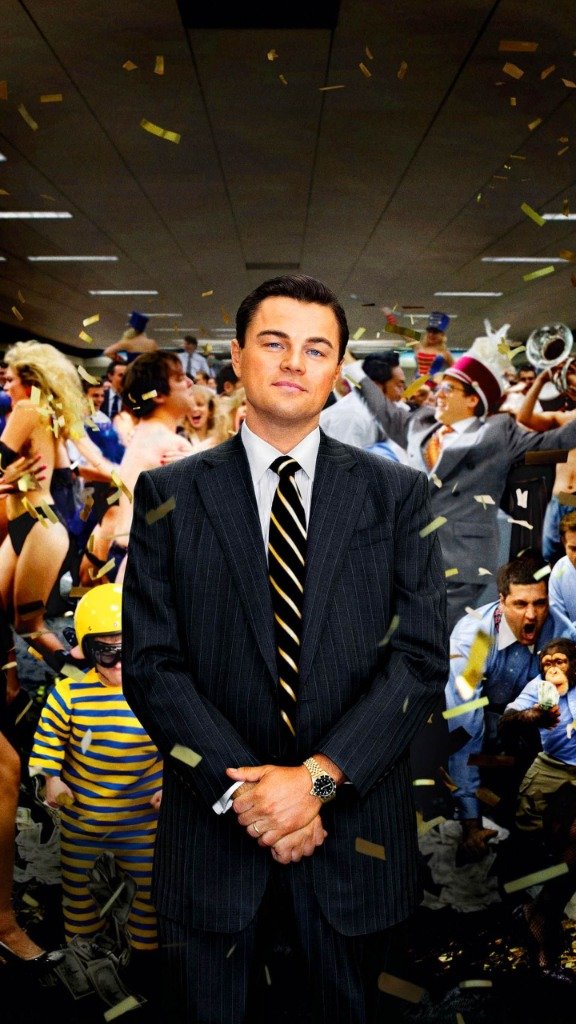
4. The Wolf of Wall Street (2013)
Martin Scorsese's dark comedy chronicles Jordan Belfort (Leonardo DiCaprio) and his boiler room brokerage, Stratton Oakmont.
The real Belfort was convicted in the US of securities fraud and money laundering (Needs verification: exact amounts and sentence). The film shows brokers pushing penny stocks (very cheap, thinly traded shares) on ordinary investors. They pumped the price up with aggressive selling and then sold their own shares at the top. This is called pump and dump.
It is a good case study of how hype, cold calls and the fear of missing out (FOMO) are used on small, thinly traded stocks.
Sell me this pen.
5. Boiler Room (2000)
High-pressure phone brokers selling shares of a worthless company.
5. Boiler Room (2000)
*Boiler Room* is a fictional story, said to be loosely inspired by real firms of this kind such as Stratton Oakmont (Needs verification). It follows college dropout Seth Davis (Giovanni Ribisi), who joins a brokerage called J.T. Marlin.
Its brokers make high-pressure phone calls to well-off people and push shares of a company that is not what it claims to be.
The movie shows why you must check a seller's registration and the company's filings before putting money into any share sold over the phone.
A sale is made on every call. Either you sell the client stock or he sells you a reason he can't.
6. Rogue Trader (1999)
The fall of Barings Bank due to unauthorized Nikkei futures trading.
6. Rogue Trader (1999)
Based on the true story of Nick Leeson (Ewan McGregor), a derivatives trader in Singapore whose hidden losses brought down Barings Bank, one of Britain's oldest merchant banks.
Leeson hid his losing trades in a secret error account numbered 88888. He kept adding to his bets on the Nikkei 225 index (Japan's main share index) without protection. A straddle is a bet that the market will not move much.
After the January 1995 Kobe earthquake the Nikkei fell sharply. His losses, widely reported at about $1.4 billion, were larger than the bank's capital, and Barings collapsed.
Doubling your bet after every loss feels like a plan. It is really a way to lose everything at once.
7. Trading Places (1983)
Commodity futures, orange juice crop reports, and cornering markets.
7. Trading Places (1983)
A comedy classic starring Eddie Murphy and Dan Aykroyd, *Trading Places* centers on a bet between two wealthy commodities brokers who swap the lives of a street hustler and an executive.
The climax takes place on a New York commodities exchange floor, where traders deal in futures on frozen concentrated orange juice. A future is a contract to buy or sell at a fixed price on a later date. The trade is timed around an official US government crop report.
The film is also linked to the 'Eddie Murphy Rule' in the US Dodd-Frank Act, which bars trading on stolen non-public government information.
A trader who learns a crop report early has an edge no one else can match, and that is exactly why it is illegal.
8. Scam 1992: The Harshad Mehta Story (2020)
The rise and fall of the 'Big Bull' of Dalal Street.
8. Scam 1992: The Harshad Mehta Story (2020)
India's highest-rated financial drama chronicles Harshad Mehta (Pratik Gandhi), who was at the centre of the 1992 securities scam, commonly reported at about ₹5,000 crore.
Mehta used loopholes in the banking system. Banks lent to each other against government bonds through Ready Forward (RF) deals, and fake Bank Receipts (BRs) helped move that money into shares. Stocks such as ACC are widely reported to have risen from about ₹200 to about ₹9,000 (Needs verification).
It gives a dramatised look at Indian market history, at how the money market and the stock market were linked, and at how one failure can spread through the system. Real events are compressed for the story.
Risk hai toh ishq hai!
9. Billions (2016-2023)
Hedge fund alpha, short squeezes, and SEC regulatory battles.
9. Billions (2016-2023)
Set in the high-stakes world of New York hedge funds, *Billions* pits brilliant fund manager Bobby Axelrod (Damian Lewis) against US Attorney Chuck Rhoades (Paul Giamatti).
Axe Capital, the fictional fund, is shown using data models, outside experts and aggressive short positions (selling shares first, hoping to buy back cheaper) to try to beat the market. Beating the market is called generating alpha.
It is a drama about hedge funds (private funds for wealthy investors), performance fees and regulators. Real practice is heavily dramatised.
Power and money attract regulators as well as admirers.
10. Succession (2018-2023)
Corporate governance, hostile takeovers, and media valuations.
10. Succession (2018-2023)
Winner of multiple Emmy awards, *Succession* revolves around the Roy family, owners of Waystar RoyCo—a global media and entertainment conglomerate.
The plot follows the Roy siblings as they fight for control of the company from their father, Logan Roy. Along the way it shows board battles, takeover offers and shareholder votes.
It shows how boards, shareholder votes and takeover bids work, and how a share price can react when leadership is uncertain. It is fiction, not a textbook.
Who controls a company, and who answers to shareholders, matters as much as its profits.
11. Scam 2003: The Telgi Story (2023)
India's massive fake stamp paper fraud and paper trail audits.
11. Scam 2003: The Telgi Story (2023)
The second installment in the *Scam* franchise details Abdul Karim Telgi, who ran a fake stamp paper racket across several Indian states. Stamp paper is the paper needed for legal documents. Reported figures for the fraud vary widely (Needs verification).
The show highlights how paper-based regulatory documentation can be forged when institutional verification is weak.
This is a fraud story, not a stock market story. The link to markets is that paper documents are easy to forge, which is one reason shares moved from paper certificates to electronic demat accounts through the depositories NSDL and CDSL.
Wherever checks are weak, fraud finds room.
12. Bad Boy Billionaires: India (2020)
Investigative series on corporate defaults, debt pledging, and fund diversion.
12. Bad Boy Billionaires: India (2020)
This docuseries looks at the downfall of well-known Indian businessmen, including Vijay Mallya (Kingfisher Airlines) and Nirav Modi (the PNB fraud). The series also covers Subrata Roy (Sahara) and Ramalinga Raju (Satyam). The Sahara and Satyam episodes were delayed by court orders in India, so availability on Netflix India has varied.
It shows how large bank loans went bad. Promoters sometimes pledge their shares to borrow (they hand shares to a lender as security), and a Letter of Undertaking (LoU) is a bank guarantee that was misused in the PNB case.
It is useful for learning the red flags to look for in a company's promoters: heavy debt, pledged shares and weak governance. The series is a documentary, so read the court and regulatory records for the facts of each case.
A promoter's lifestyle is no evidence of a company's health. The filings are.
13. Inside Job (2010)
Academy Award winner detailing the systemic cause of the 2008 meltdown.
13. Inside Job (2010)
Narrated by Matt Damon, *Inside Job* explains how looser financial rules over about thirty years, together with risky lending, helped cause the 2008 crisis. It won the Academy Award for Best Documentary.
The film argues that rating agencies, which were paid by the banks whose products they rated, gave top ratings to risky mortgage bonds.
It is a widely watched documentary on the crisis, its causes and the conflicts of interest behind it. It presents one point of view, so read other sources too.
When the person who is paid decides the rating, the rating cannot be fully trusted.
14. Enron: The Smartest Guys in the Room (2005)
Mark-to-market accounting fraud, SPEs, and the fall of Arthur Andersen.
14. Enron: The Smartest Guys in the Room (2005)
Based on the book by Bethany McLean and Peter Elkind, this documentary chronicles the bankruptcy of Enron Corporation in 2001—then the 7th largest company in the US.
Enron used mark-to-market accounting, which lets a company book expected future profit today. It also hid large debts in separate entities kept off its balance sheet, called Special Purpose Entities (SPEs).
The scandal ended the accounting firm Arthur Andersen and led to the US Sarbanes-Oxley Act of 2002, a law on corporate accounting and audits.
Ask why. Ask why, ask why, ask why.
15. Madoff: The Monster of Wall Street (2023)
A huge Ponzi scheme and the myth of returns that never dip.
15. Madoff: The Monster of Wall Street (2023)
Four-part Netflix docuseries about Bernie Madoff, a former NASDAQ chairman who ran a Ponzi scheme. A Ponzi scheme pays old investors with money from new ones. The $64 billion figure is the fake balance shown to clients, not the cash actually lost (Needs verification).
Madoff claimed to use an options strategy called split-strike conversion, but investigators concluded that he did not actually make the trades.
A critical lesson for investors: any fund that promises steady returns in every month, whatever the market does, deserves serious doubt. In India, SEBI-registered advisers may not promise returns at all.
It was all one big lie.
16. Eat the Rich: The GameStop Saga (2022)
WallStreetBets, short squeezes and the January 2021 trading restrictions.
16. Eat the Rich: The GameStop Saga (2022)
This fast-paced documentary recounts the January 2021 GameStop (GME) short squeeze driven by Reddit community r/wallstreetbets.
Many small traders bought GameStop shares and call options (contracts that gain when the price rises). Hedge funds that had sold the stock short, such as Melvin Capital, had to buy shares back at much higher prices. GameStop's short interest was reported at over 100% of its tradable shares (Needs verification).
It touches on short squeezes, gamma squeezes, Payment for Order Flow (PFOF, where a broker is paid for routing orders) and the buying limits some US brokers imposed.
Apes together strong.
17. Becoming Warren Buffett (2017)
Value investing principles, economic moats, and long-term compounding.
17. Becoming Warren Buffett (2017)
HBO documentary focusing on the life and investing philosophy of Warren Buffett, Chairman of Berkshire Hathaway.
The film charts his evolution from Benjamin Graham's strict 'cigar butt' value investing (buying cheap assets regardless of quality) to Charlie Munger's philosophy of buying 'great businesses at fair prices'.
It is mostly a biography. It touches on how he thinks about strong businesses and about patience in long-term investing.
Rule No. 1: Never lose money. Rule No. 2: Never forget rule No. 1.
Common questions
What is the difference between a short squeeze and a pump-and-dump?
A short squeeze (the main subject of Eat the Rich: The GameStop Saga) happens when a heavily shorted stock rises and the short sellers are forced to buy back shares. The Big Short is about a different idea, betting against the housing market. A pump-and-dump (featured in The Wolf of Wall Street) involves promoters artificially hyping an illiquid stock to dump their shares onto unsuspecting retail buyers.
Which film is most accurate regarding risk management breakdown?
Margin Call (2011) is often praised for its realistic mood, but it is fiction. Its value is in showing how a firm's risk models can fail and how leaders act under pressure.
Where should a complete beginner start on this list?
Start with The Big Short (2015) — it stops the story to explain what a mortgage bond, a CDO and a credit default swap actually are, so no prior finance vocabulary is assumed. Follow it with Margin Call for the institutional view of the same crisis, then Scam 1992 for the Indian equivalent. Watching in that order builds the vocabulary before the drama.
Are stock market movies factually accurate?
They are dramatised. Timelines get compressed, composite characters replace real ones, and the outcome is known to the writer but was not known to the participants. Treat them as case studies in behaviour — panic, denial, incentive conflicts — not as sources of market facts. Where a film covers a real event, check the regulator's own record: for Indian cases that means SEBI orders and exchange circulars.
Which movie best explains the 2008 financial crisis?
Three cover different layers of it. The Big Short explains the instruments and the people who bet against them; Margin Call covers one night inside a fictional bank that discovers its risk is far larger than it thought; Inside Job is the documentary that traces the regulatory and academic incentives that allowed it. Watching all three gives the trade, the firm and the system.
What is the Indian equivalent of these films?
Scam 1992: The Harshad Mehta Story covers the 1992 securities scam, which exposed the bank-receipt loophole between the money market and the equity market. It broke in the same year SEBI was given statutory powers (Needs verification of the exact sequence), and it led to tighter market rules. We cover the full Indian list — The Big Bull, Baazaar, Bad Boy Billionaires and others — in the companion guide to Indian stock market movies and series.
Can watching these films actually make me a better trader?
They can only teach you what losses look like from the inside — leverage that works until it does not, an incentive to keep quiet, a position too large to exit. They teach nothing about entries, position sizing or stops. The skill has to come from studying charts and from written rules; the films are useful for recognising the emotional state you are in, not for deciding what to buy.

Written By
Rohit Singh
Mr. Chartist
With 14+ years of experience in Indian financial markets, Rohit Singh (Mr. Chartist) is a SEBI Registered Research Analyst, Amazon #1 bestselling author, and the founder of Investology — a premium trading ecosystem trusted by a 1.5 Lakh+ strong community across India.