

Lesson 08
What Moves Share Prices
Why a share can fall on good results, what a dividend and a buyback do to the price, how oil, a tax and interest rates reach companies, how news and mood move prices, what bull and bear markets are, and why a price is not a value: each shown on real, dated days.

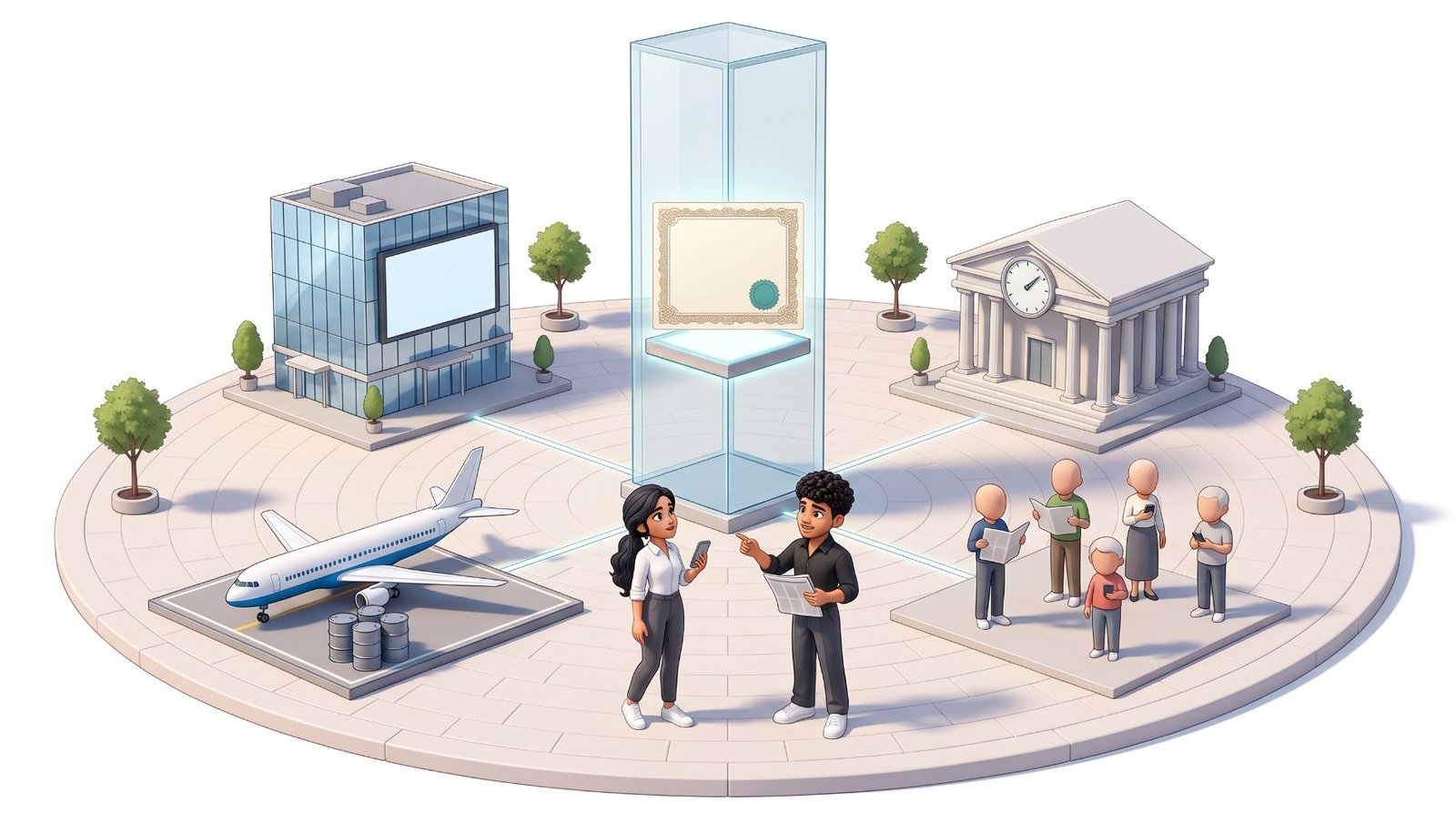
What moves share prices? Buyers and sellers changing what they will pay. They change it when their view of a company's future changes: how much it will earn, how likely that is, and what else their money could earn. Results, payouts, interest rates, the economy, news and mood all move prices through those three questions.
On 16 January 2024, HDFC Bank, India's biggest private-sector bank, reported a quarterly profit of ₹16373 crore (about $1.97 billion), more than analysts had forecast. The next day its shares closed 8.44% lower, at ₹1537.50, their sharpest one-day fall since March 2020. Why would buyers pay less for a bank that had just earned more than expected?
By the end you will be able to answer four questions: why a share can fall on the day its company beats forecasts; what happens to a price when a company pays out cash or buys back its own shares; why oil, a tax, interest rates and rumours move companies that changed nothing; and what bull and bear markets are, and why a price is not the same as a value.
Maya, who runs a burger restaurant and is learning to invest, is made up, and so are her restaurant and its numbers; every company, price and date is real. Prices are closing prices on NSE, the National Stock Exchange of India, unless the text says otherwise; our own sums say "derived". Watch the percentages: they read the same in any currency. One lakh is 100000 and one crore is 10 million. The lesson before this one, how a stock exchange works, showed how buyers and sellers are matched; this one asks why they change their minds.
Every Trade Has Two Sides
One piece, two prices, and a busy day that barely moved
Every share bought is a share sold, and a price moves when one side wants the deal more and gives ground. Maya meets this first in a small sale of her own.

The news always says a share rose because there were more buyers than sellers. Is that it?
Count them, Maya. Every share bought is a share sold: the two sides are always equal.
Then what does the headline really mean?
That one side was keener at the old price, and the other side gave ground.

After closing time, Maya thinks back to the night her first investor sold his 10% piece of her restaurant over a cup of coffee: one buyer, one seller, one price, ₹1.5 lakh. A listed share has millions of owners and a price that changes every second. With so many owners, what makes it move?
Take any trade: if 500 shares change hands, 500 were bought and 500 were sold. So "more buyers than sellers" cannot mean more shares were bought than sold; that never happens. It is a shortcut for something else: at the old price, more shares were wanted than were on offer, so one side had to give ground.
Figure 1Two sides
Same piece, different hurry
 Restaurant
The same 10% piece1 of 10 pieces of the restaurant, both nights
₹1.5 lakhthe first sale: both nights start here (₹ lakh)
Two keen buyersthey bid each other upsold at ₹1.7+13.3%The deal: ₹1.7 lakh, above the first sale's ₹1.5 lakh.
One seller in a hurryhe needs the cash by tomorrowsold at ₹1.3−13.3%The deal: ₹1.3 lakh, below the first sale's ₹1.5 lakh.
Same restaurant, same piece. One seller and one buyer both nights. Only who wanted the deal more had changed.
Figure 2Two sides
A real day: busy is not keen
 IndiGo, the last session before it joined the SensexShares traded that day, to one scale
10.7×the usual shares traded
+0.74%the price that day, ₹5115.50 to ₹5153.50: almost no move
Ask that first sale twice. What if two buyers had wanted the same piece? One offers ₹1.5 lakh; the other, keener, ₹1.6 lakh; the first goes to ₹1.7 lakh, and the second stops. One piece changed hands, from one seller to one buyer, at ₹1.7 lakh: the buyers wanted it more than the seller did. Now the mirror. What if the investor had needed the cash for his house by the next day, and only one unhurried buyer had come, offering ₹1.3 lakh? He takes it. One seller and one buyer again. The kitchen was the same both nights; only who wanted the deal more had changed. (The real sale, in why the stock market exists, stays as it was: ₹1.5 lakh, a busy restaurant.)
The same contest runs all day on an exchange. A bid is the price a buyer offers; an ask is the price a seller wants. When buyers are keener, they raise their bids to meet sellers' asks and the last price climbs; when sellers are keener, they lower their asks to meet the bids and it falls (how the order book matches them).
A real day shows that busy is not the same as keen. An index is one number that follows the prices of a fixed basket of companies; the Sensex follows 30 large Indian companies. On Friday 19 December 2025, the last session before IndiGo, India's largest airline, joined the Sensex, about 91 lakh IndiGo shares changed hands on NSE: about ten times a usual day. Funds that copy an index must own what it holds, so many had shares to buy. Yet the price ended only 0.74% higher, at ₹5153.50. Every share bought had a seller, and enough sellers were ready near the old price, so neither side had to give much ground. Which trades were the funds' is not on record (how an index changes its members). The day returns in chapter 8.
So what changes how keen people are? Buyers pay today for a share of a company's future, so they turn keener or less keen when their answer to one of three questions changes: How much will it earn? How likely is that? What else could the money earn? Or someone must trade for reasons of their own: they need cash, as the investor did in the what-if, or a fund must buy or sell by its own rules, as on IndiGo's index day (who those big buyers are). The rest of the lesson takes the forces in three parts: inside the company (chapters 2 and 3), outside it (4 and 5), and people (6 and 7).
Figure 3The map
Three questions behind every price
 What a piece is worth starts with the profit it will earn its owner.its share of the profitHow much will it earn?2Results3Cash back4The wider world
 70%chance of rainA forecast states a likelihood, not a certainty: made up here, a 70% chance of rain.a forecast states a likelihoodHow likely is that?6News and mood7Bull and bear
 5.0%a yearA fixed deposit pays its rate without a business's risks: made up here, 5.0% a year from a made-up bank.a fixed rate, without a business's risksWhat else could the money earn?5Interest rates
 A trade that is not about the future: someone needs cash, or a fund must buy or sell by its own rules.or no question at allSomeone must trade anyway
They need cash, like the seller in a hurry, or a fund must buy or sell by its own rules, like the funds on IndiGo's index day.
So what makes buyers suddenly keener, or less keen, about a company?
Company Results and Expectations
Why a share can fall on the day its company beats forecasts

My own bank earned more than the experts forecast, and its shares fell 8% the next day. How?
What were buyers paying for the day before, Maya: last quarter's profit, or the years ahead?
The years ahead, I suppose. So the forecast was already inside the price?
Yes. Profit beat it a little, but its margin, what it earns on loans after paying savers, didn't rise as hoped.
So buyers had paid for a better margin, and the report didn't show one.
And its loans grew 5% in three months, its deposits 2%: like taking more orders than your bun supplier can fill.

A price moves by the surprise in results, not by how good they are. To see why, start with how results reach the market.
In India and the US, a listed company publishes its results every three months: what it sold and what it kept as profit (companies in the UK and the EU need only report every six months). Before that day, analysts (people at brokers and funds who study companies) publish forecasts, and the price already reflects what most buyers expect. The bar the results must clear is set by expectations, not at zero.
On the day, the price moves by the surprise, better than expected, worse, or in line, and by the details that change the future: what the company keeps from each sale, its orders, and its own outlook, which it calls its .
HDFC Bank's results reached NSE at 3:53 pm on 16 January 2024, after the market had closed, so 17 January was the first day the price could react. Profit was ₹16373 crore, against forecasts from ₹15651 crore (the average of analysts polled by the data firm LSEG) to ₹16242 crore (the highest broker preview found): above every forecast found. But a bank lends out its savers' deposits, and its margin is the gap between what it earns on loans and what it pays savers, counted on every ₹100 of its assets (what it owns, its loans among them). HDFC Bank's stayed at 3.4% when analysts expected a small rise; its interest income, a bank's main earnings, came in below forecasts; and its deposits grew about 2% in the quarter while its loans grew about 5%, so future lending looked harder to fund.
Figure 4Results
Profit beat every forecast, and the price fell 8.44%

 HDFC Bank, India's biggest private-sector bankits quarter to December 2023, against what buyers expected
1 of 3 hurdles cleared
Profitwhat it kept
forecasts₹15651–16242 cr₹16373 crForecasts ran from ₹15651 crore (the average of analysts polled by LSEG) to ₹16242 crore (the highest broker preview found). The bank reported ₹16373 crore, above all of them.clearedMarginearned on loans after paying savers
3.4%, flathopeda small riseAnalysts expected a slight improvement from the low of the quarter before. No single number is used here: the forecasts differ.not clearedDepositsgrowth in the quarter, against loans
Deposits grew about 2% (1.9%) while loans grew about 5%: future lending looked harder to fund.not clearedThe price, NSE closes, Jan 2024
−12.4% in three days (derived), and about ₹1 lakh crore of market value gone on the first.
The profit was good, and the price still fell: it moved on the gap to what was expected. See the mirror dayIt works upward too. Restaurant Brands Asia, which runs Burger King's restaurants in India, reported another loss on 3 Aug 2026, a smaller one, on sales 18% higher. The next day its shares rose 20%, the most the exchange allowed.
The shares closed at ₹1537.50 on 17 January, 8.44% below the day before's ₹1679.15: their sharpest one-day fall since March 2020, and about ₹1 lakh crore of market value, the price of all its shares together, gone in a day. Two more falling days took them to ₹1470.65 on 19 January, 12.4% lower in three days (derived).
It works upward too. A company can report a loss and see its shares rise, if the loss was smaller than feared or its outlook improved. On 3 August 2026, after the close, Restaurant Brands Asia, which runs Burger King's restaurants in India, reported another quarterly loss, but a smaller one than a year before, on sales 18% higher. The next day its shares rose 20%, the most the exchange allowed that day. You will meet another in chapter 8: the day IndiGo reported a loss for its year and its shares rose. Results do not set the year's price; they reset what buyers expect.
When a company has spare cash and hands some back to its owners, does that move the price too?
Dividends and Buybacks
Two ways cash comes back, and what each does to the price

Infosys is paying a ₹23 dividend. So each share is worth ₹23 more that day?
Not quite, Maya. On the day the cash leaves, the price usually drops by about the dividend.
Then a dividend is a loss?
Neither a gain nor a loss: the money just moves, from the company to you. A buyback works differently.

A company with spare cash can hand it back to its owners in two ways. A dividend is cash paid on every share; a buyback is the company buying some of its own shares from owners who want to sell. News of either can move a price like any other news: a rising dividend or a buyback tells buyers the company expects to keep earning; a cut says the opposite. A buyback by , the kind Infosys made, offers a set price, usually above the market price; other companies simply buy their shares on the market at the going price.
On the evening of Monday 8 September 2025, after the market had closed, Infosys, an Indian IT services company, told the exchanges its board would consider a buyback. The next day its shares closed 4.98% higher, while the Nifty 50, an index of 50 large Indian companies, rose 0.39%. On 11 September, again after the close, it offered ₹1800 a share for up to 10 crore shares, ₹18000 crore in all, about 19% above that day's closing price. The next day the shares rose only 1.05%: the surprise was the first hint, not the details.
The day a dividend's cash leaves is different: it is arithmetic, not news. Take the restaurant, valued at ₹15 lakh when the 10% piece sold for ₹1.5 lakh. It keeps ₹1 lakh of spare cash, its year's payout, and pays it out: ₹10000 to the new buyer, who owns the 10% piece, and ₹90000 to Maya. The day before, the piece was worth ₹1.5 lakh, ₹10000 of it that cash. The day after, the piece is worth about ₹1.4 lakh and its owner holds ₹10000: ₹1.4 lakh + ₹10000 = ₹1.5 lakh. Nothing was created and nothing was lost, before any tax on the payout; it moved.
Figure 5Cash back
A dividend moves cash out of the price
 A real one: Infosys, Mon 27 Oct 2025On the day its ₹23 dividend went ex, the price closed ₹20.90 lower, about the dividend, while the Nifty 50 rose 0.66%.
₹1.5 lakh in all, both days
₹10000cash in her handThe dividend. The cash is hers now, in her hand or her bank, no longer part of the piece. ₹1.4 lakh + ₹10000 = ₹1.5 lakh.₹1.4 lakh + ₹10000 = ₹1.5 lakh. Not news, not a loss: nothing was created and nothing lost.
Figure 6Cash back
A buyback leaves fewer, bigger pieces

Before10 pieces, 10% each
10%10%10%10%10%10%10%10%10%10%bought back, cancelledOne piece is bought back by the restaurant with its own cash and cancelled.After9 pieces, 11.1% each
11.1%11.1%11.1%11.1%11.1%11.1%11.1%11.1%11.1%The same business is shared by nine pieces, so each is 11.1%, not 10%.The restaurant buys back one piece and cancels it: the same business, shared by fewer pieces.
On a listed share, the ex-dividend date is the first day a buyer no longer gets the coming dividend; from that day the price usually falls by about the dividend, on average slightly less (the dates are in corporate actions). Infosys paid a ₹23 interim dividend (a dividend paid partway through the year). On its ex-date, Monday 27 October 2025, its shares opened ₹15.40 lower and closed ₹20.90 lower, while the Nifty 50 rose 0.66%.
What a buyback changes is the count of shares. The shares bought back are cancelled, as India's rules require (elsewhere a company may keep them aside instead, which also takes them out of the count). The same business is then shared by fewer shares, so each is a bigger slice. In the restaurant: if it bought back the 10% piece, Maya's nine pieces would be the whole restaurant.
Results and payouts come from inside the company. What moves it from outside?
The Economy and the Sector
Oil and an airline; one tax and three car makers

Dearer fuel hurts my delivery bikes. Does it move shares too?
Some far more than others. Watch an airline, Maya: jet fuel is one of its biggest costs.
And a tax cut helps every company it touches?
Not equally. One tax on cars lifted one maker and not another, on the same day.

The economy is everyone's earning and spending; when it grows, most companies sell more. A sector, or industry, is a group of companies in the same business: airlines, banks, car makers. What touches the business touches them all, though rarely equally. A burger-shop owner feels these forces first: fuel, food costs, taxes.
One oil price, one airline, the whole market. A war in West Asia began on 28 February 2026, and the price of Brent crude, a leading world benchmark for oil, passed $100 a barrel on 9 March. In March the Nifty 50 fell 11.31%, its steepest month since March 2020: the whole market felt it. IndiGo felt it more. From the last close of February to the last of March its shares fell 18.3%, to ₹3943.50, because jet fuel is one of an airline's biggest costs. When oil fell, the airline moved the other way: on 24 June 2026, when Brent dipped below $76 for the first time since early March, IndiGo rose 4.95% while the Nifty 50 rose 0.83%.
A currency is a force too. IndiGo leases many of its planes, and what it owes on those leases and on their upkeep is mostly in US dollars, so when the rupee falls those debts grow in rupees, and the company counts the difference as a loss. In its own words, its loss for the year to March 2026 came from "exceptionally sharp rupee depreciation", changes in labour laws and a hard year; chapter 8 shows the day it said so.
One tax, three car makers. GST, the tax added to the price of most things sold in India, was 28% on cars, plus a second tax on top, a , of 1% to 3% on small cars and up to 22% on big SUVs. On 15 August 2025, Independence Day, the Prime Minister promised GST reforms by Diwali, and on Monday 18 August reports said the plan would cut small cars to 18%, while big cars might still pay 43% to 50% in all. That day, the first session after, Maruti Suzuki, India's largest carmaker and maker of small cars such as the Swift and the Wagon R, rose 8.75%; Hyundai Motor India, the Indian arm of Korea's Hyundai, which also sells small cars, rose 8.15%; M&M (Mahindra & Mahindra), a maker of SUVs such as the Scorpio-N, tractors and small trucks, rose 3.60%; the Nifty 50 rose 1.00%. By 3 September Maruti was 15.4% above its 14 August close and M&M only 0.6%.
That evening the GST Council, where the central government and the states set the tax, confirmed 18% for small cars and put big cars and SUVs at a flat 40% with no cess, from 22 September: less than the 43% to 50% they had paid, and less than August's reports had suggested. The next day, 4 September, M&M rose 5.95%, while Maruti fell 1.78% and Hyundai 1.42%, on a day the Nifty 50 moved 0.08%. One rule, one industry, two directions in one session. Our reading of the dates: the small-car cut had been expected since August, and Maruti's price had already risen 15% on it; the SUV rate was the day's surprise. This is chapter 2's rule at the scale of an industry: a price moves by the surprise.
Figure 7The wider world
One tax, and on 4 Sep the car makers split
GST on cars, 2025the tax added to the price of most things sold in India
Small cars18%was 28% + 1 to 3% cessBig cars and SUVs40%was 28% + up to 22% cess

 +22.3%Maruti Suzuki

 +21.5%Hyundai

 +9.8%M&M
 +2.3%Nifty 50
4 September, one session: M&M +5.95%, Maruti −1.78%, Hyundai −1.42%, the Nifty 50 +0.08%. The small-car cut was already in Maruti's price; the SUV rate was the surprise (our reading of the dates).
Many of the days that move prices are on a calendar, published ahead. India's central bank, the RBI, fixed its six interest-rate meetings for April 2026 to March 2027 in March 2026, before that year began, with each decision announced on a meeting's last day (chapter 5 shows why rates matter). India's inflation figure, how fast everyday prices are rising, comes out on the 12th of each month, or the next working day. The Union Budget, the government's plan of taxes and spending for the year, is presented on 1 February. A company must tell the exchange at least two working days before the board meeting that approves its results, and must publish each quarter's results within 45 days of the quarter's end (60 days for the full year). The US works the same way: the Federal Reserve's eight meetings a year and the monthly inflation dates are set in advance. So you can mark the days. What no calendar shows is the news itself: on the day, the price moves by how far it differs from what buyers expected, as the GST Council's evening showed.
The habit to keep: before asking "what happened at this company?", ask "what happened to its industry, and to the economy?", and then "what does it change for this company's own business, and what did buyers already expect?"
Dearer oil makes everything dearer, even my burger buns. What does the RBI do then, and why would that move shares?
Interest Rates and Inflation
What else could the money earn?

The RBI raised its rate on 7 October. Why would a bank's decision move a carmaker's shares?
Two roads, Maya. Dearer loans mean fewer buyers for cars, and better deposits compete with shares.
Compete how? A deposit isn't a share.
Both pay you for your money. When the deposit pays more, the share must be cheaper to tempt you.

When deposits pay more, buyers pay less for the same profit. Start with where those rates come from.
An interest rate is the price of borrowing money and the reward for saving it. India's central bank, the Reserve Bank of India (RBI), sets the , the rate at which it lends to banks, and banks' loan and deposit rates follow it over time. In the US, the Federal Reserve sets its own benchmark rate for the same purpose.
A rate reaches a share price by two roads. The first is cost and demand: when borrowing costs more, companies and their customers borrow and spend less, so companies earn less (how much will it earn?). The second is the alternative: deposits and government bonds (loans to the government that pay interest) pay more, without a business's risks, so buyers ask more of shares and pay less for the same profits (what else could the money earn?).
Figure 8The price of money
When deposits pay more, the same ₹10000 a year is worth less
Prices risethe RBI raises its repo ratebanks pay savers morea deposit competes with a share
The 10% piecepays its owner ₹10000 a year, its share of the payout
At 5.0%, a deposit needs₹2 lakhto pay the same ₹10000 a year, without the restaurant's risks: a careful buyer pays less than that for the piece.
Figure 9The price of money
On the two days the RBI raised its rate, the market fell
 Wed 4 May 2022repo rate 4.00% → 4.40%a surprise, at an unscheduled meeting: the first rise since August 2018
Wed 7 Oct 2026repo rate 5.25% → 5.50%the first rise since February 2023; inflation "not benign"
Say the restaurant's 10% piece pays its owner ₹10000 a year, its share of the ₹1 lakh payout. At a 5% deposit rate it takes ₹2 lakh in the bank to earn ₹10000 a year, without the restaurant's risks, so a careful buyer pays less than ₹2 lakh for the piece. At 8%, ₹1.25 lakh earns the same ₹10000, and that ceiling falls. Try it on the dial below: guess the ceiling at 4% before you move it there. It is an illustration of one force, not a way to value a share (how to research a stock).
Inflation matters because it pushes rates, and costs, up. When the prices of everyday things rise faster than the RBI's target, 4% with a band of 2% to 6% for April 2026 to March 2031, the RBI tends to raise its rate, and companies' costs rise too; so an inflation figure can move shares on the day it is published. What inflation does to your savings is the next lesson's subject.
A surprise hits hardest, as with results. On 4 May 2022, at an unscheduled meeting, the RBI raised its repo rate from 4.00% to 4.40%, its first rise since August 2018; the Nifty 50 fell 2.29% that day.
And today, back to chapter 4's oil. In August 2026 consumer prices in India were 4.8% higher than a year before, up from 4.5% in July, and the RBI expected inflation to average almost 5.8% over the next three quarters. On 7 October 2026 it raised the repo rate from 5.25% to 5.50%, its first rise since February 2023. Its statement called inflation and its outlook "not benign", and pointed to the conflict in West Asia and the sharp swings in crude oil prices it brought. The Nifty 50 closed 0.76% lower that day. The September inflation figure, published on 12 October, was 5.54%. The repo rate is 5.50% as of 28 October 2026.
The first road showed the same day: the index of car makers (Nifty Auto) fell 1.58% and the index of property developers (Nifty Realty) 1.77%, about twice the market's fall. Many of their customers borrow to buy a car or a home, and a dearer loan can mean fewer buyers.
Those were decisions on record. What about news that turns out to be only a rumour?
News, Rumours and Mood
Filings, rumours, and five days of a burger chain

A friend forwarded a message: some company is about to win a huge order. Should I believe it?
First check where it came from, Maya. Real news goes to the exchange first.
And if everyone believes the forward anyway?
Then the price can move before anyone knows it's true. And mood can move it with no news at all.

News moves a price when it changes what buyers expect. Listed companies must tell the exchanges about events that can move the price, such as results, deals, big orders and changes at the top, under SEBI's listing rules (), and the exchanges publish them to everyone at the same moment on the company's page.
A rumour is a story nobody has confirmed: a report, a forward, a post. When a report moves a share, the exchange can ask the company to confirm or clarify it, and publishes the question and the answer; on NSE these appear as "News Verification". In India, since 1 December 2024 the 250 largest listed companies must also confirm, deny or clarify such a report within 24 hours when it comes with a big move in the price.
Three checks work on any headline. Is it on the company's own page on NSE or BSE? Who says it, and how would they know? Does it change how much the company will earn, or only how people feel today? (Whom to trust.)
Mood, also called sentiment, is the third force here. When many buyers feel confident at once, they pay more for the same profits; when they are afraid, less. Nothing in the business has to change (why we feel it).
A burger chain like Maya's, only far bigger, shows it. Burger King India sold its shares to the public at ₹60. On its first day, Monday 14 December 2020, they closed at ₹135, the highest price the exchange allowed that day. The next two days they rose by the most allowed again, to ₹162 and then ₹194.40, more than three times the ₹60. On the fourth day they opened at the highest price allowed, ₹213.80, and closed at the lowest, ₹175: the mood turned inside one day. The fifth day closed at the lowest allowed again, ₹157.50 (why prices have daily limits). The restaurants were the same restaurants all week.
Figure 10News and mood
Five days, the same restaurants
RestaurantBrands AsiaBurger King India's first week on the marketsold to the public at ₹60 · its first five days, 14 to 18 Dec 2020 · now Restaurant Brands Asia
After a break, two later closes
On 30 March 2026 the shares, of what is now Restaurant Brands Asia, closed at ₹57.26, below the ₹60 they were first sold at: their lowest close on record. On 28 October 2026 they closed at ₹94.95. Which of these prices was what the business was worth? Hold that question for chapter 8.
And when a mood lasts for months, across the whole market?
Bull and Bear Markets
A yardstick for a long rise or fall, and what it does not say
The news keeps saying bear market. Is that a fall that is about to get worse?
No, Maya. It names a fall that has already happened: 20% or more in a broad index.
So nobody can tell me when it ends?
Nobody. Bull and bear describe the past; neither forecasts the next move.

A bull market is a long rise in a broad index and a bear market a long fall, and the usual yardstick is 20%. The US regulator's investor site puts it plainly: a bear market is generally when a broad market index falls 20% or more over at least two months, amid pessimism; a bull market, a rise of 20% or more over at least two months, amid optimism. A fall of 10% or more that stops short of 20% is usually called a . These are conventions, not laws, and the label is given afterwards. The animals are only a memory aid: a bull tosses upward with its horns, a bear swipes down. The yardstick is an index, such as the Nifty 50 (how an index works).
The Nifty 50 closed at a record 12362.30 on 14 January 2020. It first closed more than 20% below that record on 12 March. On 23 March, as the pandemic shut much of the world, it closed at 7610.25, 38.4% lower in 48 trading days. By 17 April it had closed more than 20% above that low, and on 9 November it closed above its old record, at 12461.05, 63.7% up from the low. A bear and a bull inside one year; not every bear ends so soon. In a fall like this, some sellers are not judging the business at all: they need cash, like the investor in chapter 1's what-if.
Now use the words on today's market. The Nifty 50's record close is 26328.55, on 2 January 2026; its lowest close since was 22231.80, on 8 October 2026, 15.6% lower. By the 20% yardstick that is a correction, not a bear market, as of 28 October 2026. The label says nothing about tomorrow.
And the label is for the index, not for each share. In March 2026, when the Nifty 50 fell 11.31% and IndiGo 18.3% (chapter 4), Sun Pharma, a medicine maker, ended the month 1.2% higher.
Figure 11Bull and bear
A bear and a bull in one year
The Nifty 50, 2020an index of 50 large Indian companies

Figure 12Bull and bear
Today, and one month, on the same yardstick
Today, on the same yardstick
correction−20%
bear−15.6%
From the record close, 26328.55 on 2 Jan 2026, to the lowest since, 22231.80 on 8 Oct 2026: a correction, not a bear market, as of 28 Oct 2026.
Not every share follows · March 2026
Nifty 50−11.31%Nifty 50 fell 11.31% in March 2026, the index all the others are read against.IndiGo−18.30%IndiGo fell 18.30% in March 2026, more than the index. Sun Pharma+1.16%Sun Pharma rose 1.16% in March 2026, while the index fell.
If prices can swing 38% in two months, what is a share really worth?
Price and Value Are Different
A fact and an estimate, and one real year to read
After closing time, Maya hears news of the restaurant's 10% piece, the one the new buyer bought from the first investor. A friend of the new buyer has offered ₹2 lakh for it: more than anyone has paid for it.

Someone offered the new buyer ₹2 lakh for her tenth of my restaurant. Is that what it is worth?
It is what one person offered tonight. What does that tenth earn its owner in a normal year?
About ₹15000 of profit in a good year. ₹10000 of it reached her as cash.
Then its value is what all those years of profit are worth to a buyer today. The offer is a price.
So the price is a fact, and the value is an estimate.
Yes. And every buyer's estimate differs. That is why prices keep moving.

A price is one public number, changing every second, set by whoever wants the deal more. Value is an estimate of what the business will earn for its owners over its whole life, and what that is worth today: the three questions answered for years, not for today. Nobody can see it on a screen (how analysts estimate it).
Price can sit far from any estimate of value, in both directions, and stay there. Now answer chapter 6's question. Burger King India's shares closed at ₹194.40 in their first week, ₹57.26 on 30 March 2026 and ₹94.95 on 28 October 2026, while the company went on serving burgers. None of those numbers was "the value": each was what buyers would pay that day.
A price can also fall far on real news and still leave the question of value open. IndiGo's shares fell by a third in five months, from ₹5934.00 on 20 October 2025 to ₹3943.50 on 30 March 2026, through December's cancelled flights and March's oil shock; yet in the year to March 2026 the airline carried 123.4 million passengers, 4% more than the year before. How much of that fall changed what the airline will earn over its life is each buyer's estimate; the price is only what they paid each day.
Over long periods, prices tend to follow what businesses earn, because profits are what owners finally receive. Nobody promises when: why the stock market exists showed a growing company's shares falling far below their first price before they climbed.
Now read one real year with everything in this lesson: IndiGo, the airline of chapters 1 and 4, from 1 October 2025 to 28 October 2026. Its highest close in that window was ₹5934.00, on 20 October 2025; its lowest ₹3943.50, on 30 March 2026; and it closed at ₹4690.00 on 28 October 2026. Eight days carry a pin, each for a force this lesson named and each with its cause in two reports. Before you open a pin, read its date and guess which of the three questions that day turned; the pin's panel gives the answer. The other big days have none: not every move has a reason anyone can name, so be wary of a story told after the fact.
Figure 13Price and value
IndiGo's year, pinned
IndiGo on NSE1 Oct 2025 to 28 Oct 2026 · the Nifty 50 behind
highest close₹5934.0020 Oct 2025lowest close₹3943.5030 Mar 202628 Oct 2026₹4690.00−21.0% from the high
 News, chapter 6. The question it turned: how likely is that?.
Mon 8 Dec 2025News · chapter 6−8.32%Nifty 50 −0.86%
After a week of cancelled flights under new rules on pilots' duty hours: the window's biggest one-day fall, 16.6% below the 28 November close. The question it turned: how likely is that?
1 of 8
Remember the seller in a hurry in chapter 1? He took ₹1.3 lakh, not because the restaurant was worse, but because he needed the cash by the next day.
Then before I buy a single share, I want to know I'll never have to sell on someone else's schedule.
Before you go
Check yourself
4 questions from this lesson. Pick an answer to see why, then slide on to the next.
Question 1 of 4

Questions readers ask
Common questions
What moves share prices?
Buyers and sellers changing what they will pay. They change it when their view of a company's future changes (how much it will earn, how likely that is, what else their money could earn) or when someone needs cash. Results, payouts, the economy, taxes, interest rates, news and mood all work through these.
Why do share prices fall after good results?
Because the price already carried what buyers expected. If results beat forecasts by less than hoped, or the details point to slower growth, the price can fall. HDFC Bank's profit beat forecasts on 16 January 2024; its shares closed 8.44% lower the next day, their sharpest one-day fall since March 2020.
Does a share price fall when a dividend is paid?
It falls on the ex-dividend date, not the payment date: from that day a buyer no longer gets the coming dividend, so the price usually drops by about the dividend. The owner's total, share plus cash, is roughly unchanged before tax. Infosys closed ₹20.90 lower on 27 October 2025, the day its ₹23 dividend went ex, while the market rose.
How do interest rates affect share prices?
Higher rates make borrowing dearer and bank deposits more rewarding, so buyers tend to pay less for the same profits; lower rates work the other way. On 4 May 2022, after a surprise RBI rise to 4.40%, the Nifty 50 fell 2.29%.
What is the difference between a bull market and a bear market?
Generally, a bull market is a rise of 20% or more in a broad index over at least two months, and a bear market a fall of 20% or more. In 2020 the Nifty 50 fell 38% from its January record by 23 March, then closed at a new record on 9 November.
Is a share's price the same as its value?
No. The price is what the last buyer paid; the value is what the business's future earnings are worth today, which each buyer estimates differently. A price can sit far above or below any estimate of value for long periods.
Words to keep
The 13 words this lesson used, in plain English
Bid and ask
A bid is the price a buyer offers; an ask is the price a seller wants. A trade happens where they meet.